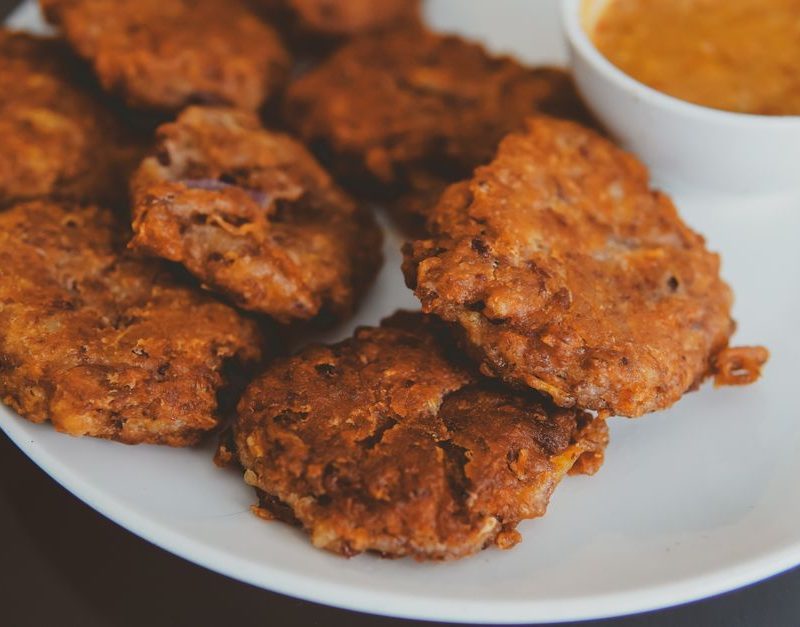
Courgette fritters with yoghurt dip turn a few everyday ingredients into golden, herby rounds with tender middles. The courgettes bring a gentle flavour, while spring onions, lemon and dill keep everything lively. Serve them straight from the pan with a cool, tangy dip, and you have the beginnings of a relaxed lunch or supper.
The useful trick is to remove enough water from the courgettes before mixing the batter. That gives you fritters that hold together without needing lots of flour. This recipe walks you through the squeezing, mixing and pan cooking, with texture cues to help you judge each stage.
What you will need
Makes: about 12 small fritters, serving four as part of a meal or two for a more substantial lunch. Allow around 25 minutes for preparation, including draining, and 20 minutes for cooking in batches. A coarse grater, clean tea towel, mixing bowl and wide frying pan are all you need.
For the courgette fritters
- 600g courgettes, trimmed
- Half a teaspoon of fine salt, for drawing out moisture
- 3 spring onions, trimmed and finely sliced
- 2 medium eggs
- 75g plain flour, plus a little extra only if needed
- 1 small garlic clove, finely grated
- 2 tablespoons finely chopped fresh dill
- Finely grated zest of half an unwaxed lemon
- Freshly ground black pepper
- 2 tablespoons olive oil, divided between batches
For the yoghurt dip
- 200g plain thick Greek-style yoghurt
- 1 tablespoon lemon juice, plus more to taste
- 1 tablespoon finely chopped fresh dill
- Half a small garlic clove, finely grated, optional
- A small pinch of salt and some black pepper, to taste
Choose firm courgettes with unblemished skins. There is no need to peel them: the skins add colour and soften during cooking. If you have a particularly large courgette with a spongy, seedy centre, scrape that part out and weigh the remaining flesh for the recipe.
How to make the fritters
- Grate and salt the courgettes. Coarsely grate the courgettes into a colander set over a bowl. Toss with the half teaspoon of salt and leave for 10 minutes. The shreds should soften and release some liquid. Meanwhile, slice the spring onions, chop the dill and prepare the lemon zest.
- Mix the dip. Stir the yoghurt, lemon juice, dill and optional garlic together. Taste and add a little salt and pepper if needed. Cover and refrigerate while you cook. The garlic will become more noticeable as the dip stands, so start with the small amount suggested.
- Squeeze thoroughly. Tip the courgettes onto a clean tea towel, gather the corners and twist firmly over the sink. Squeeze in several small bundles if that is easier. Keep going until the courgettes feel compact and damp rather than dripping. Transfer them to a dry bowl and loosen the shreds with a fork.
- Make the mixture. Beat the eggs in a separate bowl, then add them to the courgettes with the spring onions, flour, garlic, dill, lemon zest and pepper. Stir until evenly combined. The mixture should hold in a soft mound on a spoon, with no puddle of liquid at the bottom. Mix only until the flour disappears.
- Cook a small tester. Heat a little of the measured oil in a wide non-stick frying pan over a medium heat. Add a heaped tablespoon of mixture and flatten it gently to about 1cm thick. Cook for 3–4 minutes on each side, until golden and set throughout. Adjust the heat if the outside browns before the middle cooks.
- Finish in batches. Spoon more mixture into the pan, leaving room between the fritters so you can turn them comfortably. Flatten each one and cook as above, adding the remaining oil a little at a time between batches. Stir the uncooked mixture briefly before each batch, as moisture can collect underneath.
- Serve while warm. Transfer cooked fritters to a wire rack while you finish the rest. Split one open to check that the centre is set, with no wet egg or raw flour mixture. Serve with the chilled yoghurt dip alongside, rather than spooning it over everything in advance.
Getting the texture right
Courgettes vary in how much water they contain, so the feel of the mixture matters more than making every spoonful look identical. Proper squeezing does most of the work. Adding lots of flour to wet courgettes can leave you with heavy, doughy fritters whose vegetable flavour gets lost.
If the tester spreads into a thin puddle, stir one extra tablespoon of flour into the remaining mixture and try again. If it holds together but sticks when you turn it, give it longer on the first side. A cooked crust should release more easily; sliding a thin spatula underneath helps protect the edges.
Keep the heat moderate and the fritters fairly thin. A very hot pan can colour the surface while leaving the middle undercooked. Overcrowding makes turning awkward and can encourage steaming. Use two pans if you are comfortable managing them, or accept a few small batches and serve as they are ready.
Make them into a meal
For lunch, serve three fritters per person with the dip and a generous tomato and cucumber salad. Add wholemeal bread or a warm pitta if you would like something more substantial. The cool vegetables and soft bread work particularly well with the warm, crisp edges.
For supper, pair the fritters with roasted carrots or peppers and a bowl of beans dressed with lemon and parsley. Keep the accompaniments simple so you can concentrate on the pan. You can also tuck warm fritters into a wrap with shredded lettuce, spooning the dip inside just before eating.
Simple flavour variations
- Parsley and chive: replace the dill in both the fritters and dip with the same total quantity of chopped parsley and chives.
- A little feta: fold 50g crumbled feta into the mixture. Taste the cooked tester before adding any extra seasoning, as the cheese contributes salt.
- Gently spiced: add half a teaspoon of ground cumin to the fritters and use chopped mint instead of dill in the dip.
Preparing ahead and storing leftovers
You can grate, salt and squeeze the courgettes a few hours ahead, then refrigerate them in a covered container. Keep the eggs and flour separate until you are ready to cook. Mixing the full batter well in advance lets more liquid escape and makes the consistency harder to manage.
Cool leftover fritters promptly and refrigerate in a covered container within two hours. Keep the dip separately chilled and eat both within two days. Reheat the fritters once, on a baking tray in an oven at 180°C fan until steaming hot throughout; start checking after 10 minutes. Their edges may be softer than when freshly cooked, but a hot oven helps restore some texture.