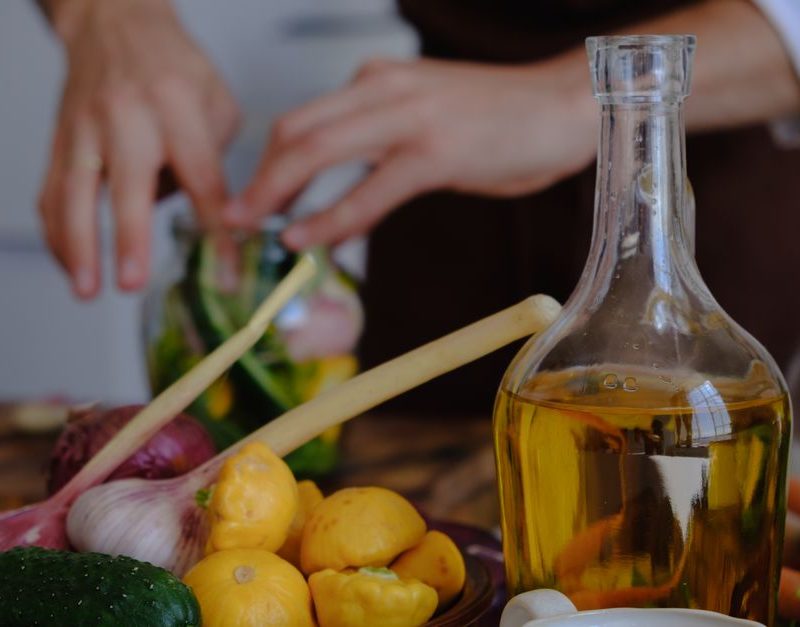
Choosing an oil can feel surprisingly complicated when the shelf offers everything from mild vegetable oil to peppery extra virgin olive oil. For everyday cooking, you can make the decision much simpler: choose an oil rich in unsaturated fats, match its flavour and intended use to your meal, and pour with a little care. You do not need a collection of specialist bottles to cook well.
This guide focuses on building a small, useful selection for the hob, oven and finishing touches. The aim is to help you pick oils you enjoy and use confidently, without turning each dinner into a comparison exercise.
Start with the kind of fat
UK healthy eating guidance recommends choosing unsaturated oils and using them in small amounts. Olive, rapeseed and sunflower oils are everyday examples. A practical starting point is to use one of these in place of some of the butter, lard or ghee you would otherwise cook with.
Think about a replacement within your usual cooking routine. You might soften onions in rapeseed oil, roast vegetables with olive oil or grease a baking tin with sunflower oil. Adding extra oil to an already finished meal is a different decision from changing the fat used to prepare it.
No oil makes the rest of a meal irrelevant. Vegetables, beans, whole grains and other ingredients still deserve attention. Oil has a useful supporting role: it carries flavour, helps food cook and contributes to a texture you want to eat.
Choose a dependable everyday bottle
Rapeseed oil for a mild starting point
Refined rapeseed oil usually has a mild flavour, making it useful when you want the other ingredients to stand out. It suits everyday frying, roasting and many bakes designed to use oil. Cold-pressed rapeseed oil can taste more distinctive, so check the bottle and consider whether that flavour fits your dish.
Try a mild version for a vegetable omelette, a tray of carrots or the onion base of a lentil stew. You can use the same bottle across several meals without giving everything a strong finishing flavour.
Olive oil for cooking and flavour
Olive oil works well with tomatoes, beans, leafy vegetables and many other everyday ingredients. Extra virgin olive oil has a more noticeable flavour, which may be grassy, fruity or peppery. Taste a little with bread before deciding where you most enjoy it.
You can use extra virgin olive oil for ordinary cooking at moderate heat as well as for finishing food. There is no need to reserve every bottle exclusively for salads. However, if its flavour is the main reason you bought it, spooning a little over cooked vegetables may show that character more clearly.
Sunflower and other vegetable oils
Sunflower oil is another straightforward option when you prefer a neutral taste. A bottle labelled vegetable oil may contain one oil or a blend; the ingredients list tells you which. Check the label for its intended cooking uses rather than assuming every vegetable oil behaves identically.
Choose according to the cooking you actually do. If you mostly prepare soups, traybakes and simple pan-cooked meals, one suitable everyday oil may cover most of your needs.
Match the oil to the job
- Softening vegetables: choose olive oil for a more noticeable flavour or a mild oil when you want a neutral base.
- Roasting: use an oil labelled as suitable for roasting, and toss the food thoroughly so it is lightly coated.
- Quick pan cooking: choose an oil suitable for frying and keep control of the heat throughout.
- Baking: follow a recipe developed for oil. Replacing solid butter can change the structure as well as the flavour.
- Finishing: use a small amount of a flavourful oil where you will notice it, such as over warm beans or roasted squash.
A flavoured oil can be useful, but it is optional. Toasted sesame oil, for example, has a strong taste, so a little added towards the end can be enough. Follow its label for cooking instructions, and check ingredients carefully if you need to avoid an allergen.
Understand heat without chasing a perfect number
The smoke point is the temperature at which an oil begins to smoke. It varies with the oil and how it has been processed, and it is not a complete ranking of nutritional quality. For home cooking, the useful habit is to select an oil appropriate for the method and avoid overheating it.
Start with a controlled heat rather than automatically turning the hob to its highest setting. Have chopped ingredients ready before heating the pan, and stay nearby. If oil starts smoking, turn off the heat and move the pan away from the hot ring if you can do so safely. Let it cool before handling it further.
A pan that repeatedly smokes may need a lower setting, a different cooking method or an oil better suited to the job. Buying a different bottle will not solve a habit of leaving an empty, oiled pan over fierce heat.
Use enough to do the job
Pouring directly from a large bottle makes it easy to add more than intended. Try measuring with a teaspoon or tablespoon while you learn what your pans and recipes need. These are kitchen tools for consistency, rather than a reason to count every drop.
For roasted vegetables, put the pieces in a bowl, add a measured amount and toss well before spreading them out. For pan cooking, tilt the pan to distribute the oil across its surface. Good coverage often matters more than leaving a pool in one corner.
If onions start catching during gentle cooking, lower the heat and add a small splash of water when appropriate, rather than repeatedly adding oil. Take care when adding liquid to a hot pan, and never pour water into a pan of hot frying oil.
Buy and store bottles you will finish
Choose a bottle size that matches how often you cook. A large container is less useful if it sits open for months while you reach for another oil. Keep the lid tightly closed and store oils away from direct sunlight and the heat of the cooker.
Follow any storage instructions on the label, particularly for speciality oils that may need refrigeration after opening. Check the best-before date when buying, and use older bottles first. If an oil develops an unpleasant stale smell or taste, replace it rather than trying to hide it with stronger ingredients.
Make your next choice simple
Start with one mild oil suitable for your usual cooking. Add a more flavourful bottle only if you have a clear use for it. On your next shop, check the ingredients, intended uses and storage instructions, then choose a size you can comfortably finish.
Over the following meals, notice which oil suits your food and how much gives the result you want. That small routine is easier to maintain than continually searching for a single perfect oil. If you have a specific health condition or need individual dietary advice, ask your GP or a registered dietitian to help you make choices that fit your circumstances.