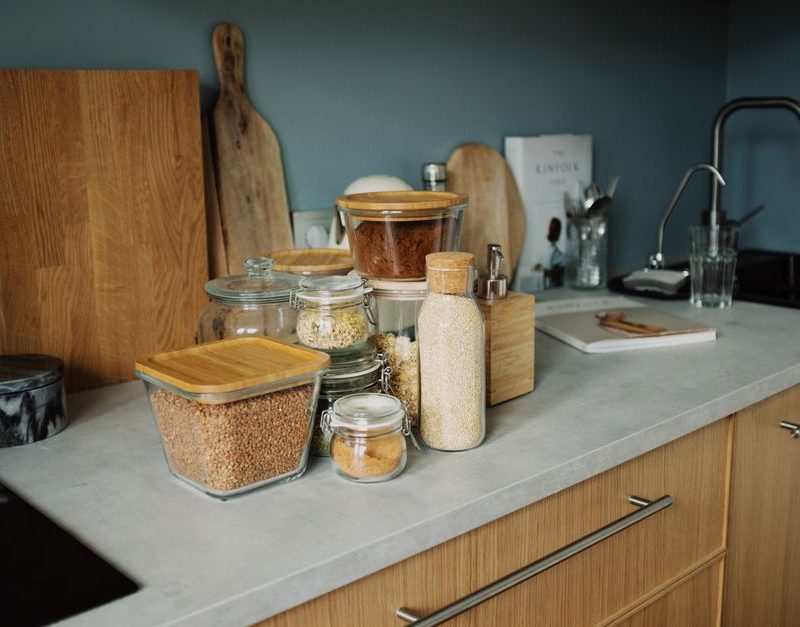
A kitchen that makes healthy eating easier does not need matching jars, a large worktop or an impressive collection of appliances. It needs to work when you arrive home hungry, when breakfast is rushed and when washing up already fills the sink. Small changes to where things live can make preparing an everyday meal feel much more manageable.
The aim is to remove awkward steps between deciding to eat and getting food onto a plate. Rather than redesigning your diet, look at the physical space around you: what you can reach, what blocks your worktop and what you repeatedly have to hunt for. Start with the meal that currently feels most troublesome.
Notice where your kitchen slows you down
Before moving anything, follow yourself through making a familiar meal. Perhaps you take a chopping board from one cupboard, cross the room for a knife, then clear paperwork before you can slice a carrot. Each interruption is small, but together they make cooking feel like a bigger undertaking.
Choose one repeated frustration to solve first. Put the colander somewhere you can reach without unloading a cupboard. Move the everyday saucepan out from beneath the roasting tins. Give the kettle a clear landing space for a mug. Useful organisation starts with your actual movements, rather than a photograph of somebody else’s kitchen.
- Which item do you search for most often?
- What needs moving before you can prepare food?
- Which cupboard is awkward to open while cooking?
- Where do dirty utensils pile up and block the next step?
Protect one clear preparation space
You do not need every surface to be empty. Aim for one dependable area big enough for a chopping board and a bowl. Move post, spare charging cables and other non-kitchen objects into a separate basket or another room, so clearing them does not become the first stage of every meal.
Keep this space close to the tools you use most. A board, a suitable knife and a mixing bowl will support plenty of simple meals. If your kitchen is tiny, a tray can hold items that need moving temporarily, provided it has a safe place to sit away from the hob.
Leave enough room to work comfortably. Crowding a board between appliances makes chopping awkward, while balancing bowls near an edge invites spills. Return occasional equipment to a cupboard if leaving it out means losing the only space where you can cook.
Arrange tools around everyday jobs
Think in terms of tasks rather than perfect categories. Breakfast bowls can live near the spoons you use with them. Keep a tin opener where you can find it when opening beans or tomatoes. Store oven gloves somewhere accessible before you switch on the oven, away from hot surfaces.
Make useful equipment easy to reach
A vegetable peeler buried beneath spare utensils is less helpful than one within easy reach. Keep frequently used tools at the front and occasional equipment further back. Stack pans so that removing your usual one does not require lifting a heavy tower.
You do not need to buy organisers immediately. An existing shallow box can separate small tools, and a spare container can corral loose clips. Use what you have first, then notice whether anything is still difficult to reach or put away.
Give each tool a dependable home
Consistency matters more than the precise location. If several people use the kitchen, agree where the essentials belong. A simple label inside a cupboard can help everyone return things to the same place without turning the room into a complicated filing system.
Make meal assembly easy to see
Healthy eating usually involves combining different foods across meals, but that is harder when useful ingredients disappear behind unrelated items. Arrange the foods you already use so you can see possibilities when you open a cupboard. You might keep pasta beside the pan you cook it in, with a reminder of favourite additions nearby.
This is about making existing choices convenient. A bowl beside your breakfast ingredients can prompt you to get started; accessible serving dishes can make adding vegetables to the table less of a scramble. Keep food according to its storage instructions, even if another location looks more attractive.
A small card inside a cupboard can list familiar combinations: toast with eggs and tomatoes, couscous with chickpeas and vegetables, or a jacket potato with beans and a side salad. Treat these as reminders of meals you know how to make, with flexibility for appetite and what is available.
Keep convenience foods convenient
Opening a packet or using prepared ingredients can be part of an ordinary home-cooked meal. The kitchen should support the level of effort you can manage that day. Keep scissors accessible for packaging, a sieve handy for draining and a microwave-safe bowl somewhere easy to retrieve.
If using frozen vegetables means you can add them to dinner, make sure the equipment needed to cook them is straightforward to find. If washing a large appliance puts you off making a simple sauce, consider whether a fork and bowl would do the job. Fewer steps can make a useful habit easier to repeat.
Design for the people using the space
A well-arranged kitchen should suit your reach, strength and household routines. Put heavier items where you can lift them comfortably, and avoid arrangements that require stretching over a hot hob. Keep knives, cleaning products and other hazards safely away from children.
For shared kitchens, give each person a clearly agreed place for personal items while keeping communal tools accessible. Where allergies are involved, follow the person’s established precautions for storage, preparation and cleaning; a tidy-looking shelf alone does not prevent cross-contact. Ask a registered dietitian for advice about specific dietary needs.
Make the reset small enough to repeat
The most useful finishing routine prepares the kitchen for its next use. Wash the board, clear the preparation space and return essential tools to their homes. If you cannot do everything, focus on the obstruction most likely to stop you cooking next time.
Avoid creating an arrangement that requires constant decanting, elaborate folding or a lengthy evening tidy. Containers should be easy to open and return. Storage should help you use the kitchen, rather than become another demanding household task.
Try one change and watch what happens
Move the item you always struggle to find, clear your chopping space or rearrange one crowded drawer. Use the kitchen normally for a few days, then ask whether that change actually helped. If it did not, move things again without treating the first attempt as a failure.
Your kitchen can evolve with your routines. What matters is being able to begin a meal without a string of small obstacles. A clear board, a reachable pan and tools that return to the same place can make everyday eating feel easier long after the initial tidy.