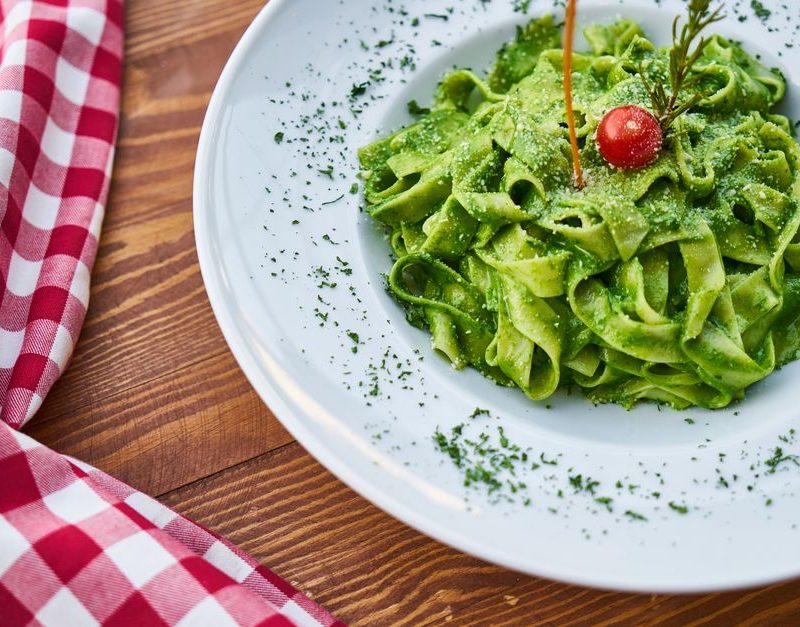
Broccoli and Almond Pesto Pasta turns a head of broccoli into a generous green sauce, with toasted almonds for depth and lemon to keep everything lively. Instead of leaving the vegetables as separate florets, you blend them into a textured pesto that settles into the curves of the pasta. It is a useful dinner when you want something comforting and full of vegetables, with enough crunch left on top to make each mouthful interesting.
This version uses both the florets and the tender centre of the stalk. Basil gives it a familiar pesto fragrance, while a little cheese rounds out the flavour. The key is to loosen the blended mixture with pasta cooking water until it coats the pasta easily. You are aiming for a soft, spoonable sauce rather than a stiff paste.
What you will need
Serves four. Allow about 15 minutes for preparation and 20 minutes for cooking, with some overlap while the water heats. You will need a large saucepan, a small frying pan, a colander and a food processor. A stick blender in a tall jug also works, although you may need to blend in smaller batches.
Ingredients
- 350g dried pasta, such as fusilli, penne or orecchiette
- 1 large head of broccoli, about 450g before trimming
- 60g whole almonds, roughly chopped
- 30g fresh basil, including the tender stalks
- 1 small garlic clove, peeled and roughly chopped
- 40g Parmesan or vegetarian hard cheese, finely grated
- 3 tablespoons extra virgin olive oil
- 1 lemon, finely zested, with 2 tablespoons juice to start
- Salt and freshly ground black pepper, to taste
- A mugful of reserved pasta cooking water, used as needed
Choose ordinary or wholewheat pasta according to the texture you enjoy. Short shapes are particularly easy to toss through this thick sauce, and their grooves catch the little pieces of almond. If you use a vegetarian cheese, check that the label confirms it is suitable for vegetarians, as traditional Parmesan is made with animal rennet.
How to make broccoli and almond pesto pasta
- Prepare the broccoli. Rinse it, then cut the florets into small, evenly sized pieces. Slice off the dry end of the stalk and peel away any tough outer layer. Dice the tender centre fairly small so that it cooks at the same pace as the florets.
- Toast the almonds. Put them in a dry frying pan over a medium-low heat. Cook for about 4–6 minutes, stirring frequently, until fragrant and lightly golden on the cut surfaces. Tip onto a plate immediately so they do not keep browning in the hot pan. Set aside about a tablespoon for the topping.
- Cook the broccoli. Bring a large saucepan of water to the boil and add a little salt. Add the diced stalk and florets, then simmer for 4–5 minutes, or until a knife slips easily through them. Lift the broccoli into a colander with a slotted spoon, keeping the water in the saucepan. Let it drain and release steam while you start the pasta.
- Boil the pasta. Return the broccoli cooking water to the boil. Add the pasta and cook according to the packet instructions until tender with a little bite. Stir occasionally to prevent sticking. Before draining, scoop out a generous mugful of the cooking water and set it aside.
- Blend the pesto. Put the drained broccoli, remaining almonds, basil, garlic, cheese, olive oil, lemon zest and 2 tablespoons of lemon juice into the food processor. Add 4 tablespoons of pasta cooking water. Pulse, scrape down the sides, then blend briefly until you have a thick sauce with some texture. Add another splash of water if the blades struggle.
- Toss and loosen. Return the drained pasta to the warm saucepan, off the heat. Add the broccoli pesto and toss thoroughly. Stir in more reserved water a little at a time until the sauce coats every piece without clumping. It should look slightly looser than you want on the plate, because the pasta will continue absorbing moisture.
- Taste and serve. Add black pepper, then taste before adding salt or extra lemon juice. Divide between bowls and scatter over the reserved toasted almonds. Serve straight away while the sauce is soft and the topping is crisp.
Getting the texture right
Broccoli needs to be properly tender for this sauce. Florets that are pleasant to eat with a firm bite can still leave the pesto grainy, especially when you use the stalk. Test a stalk cube before draining; if its centre resists the knife, give it another minute. Drain well so that you control how much liquid goes into the blender.
Blend the sauce only as far as you like. A slightly coarse pesto gives you flecks of basil and little almond pieces, while a longer blend produces a smoother coating. If your processor bowl is large, stop and scrape it down rather than adding lots of water simply to keep the blades moving.
Once the pesto meets the pasta, add liquid gradually. A tablespoon or two can make a noticeable difference. Keep the pan off direct heat during this stage: the residual warmth is enough to bring everything together, and vigorous cooking can make the cheese catch on the bottom.
Ways to serve it
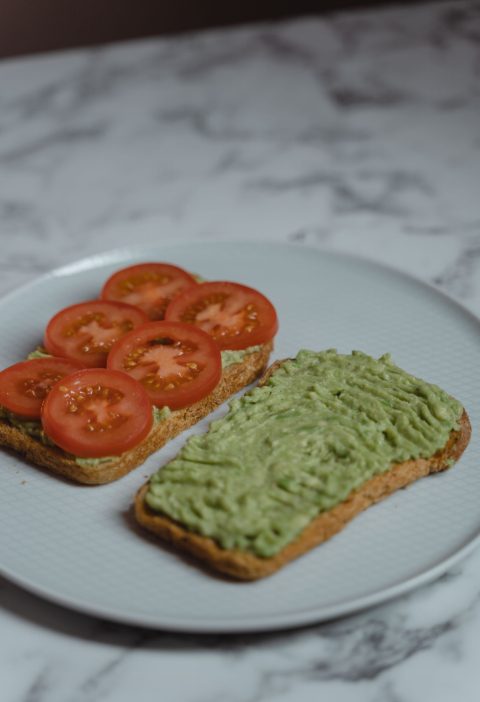
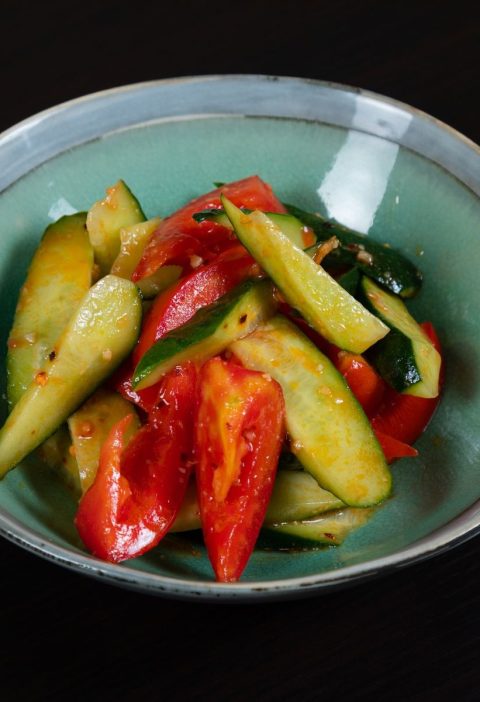
The finished pasta is substantial enough to serve by itself. For a fresh side, try sliced tomatoes with black pepper or a bowl of crisp lettuce and cucumber. Keep the dressing simple so that it does not compete with the basil and lemon in the sauce.
If you want to add beans, fold a drained tin of cannellini beans through the pasta and warm everything gently before serving. They provide a soft contrast to the almonds. You may need an extra splash of water because the larger mixture will be harder to toss.
Simple variations
- Use frozen broccoli: weigh out about 400g and cook from frozen until tender, following the packet guidance. Drain thoroughly before blending.
- Try a dairy-free version: leave out the cheese and add another tablespoon of olive oil. Taste carefully for salt and lemon, as the flavour will be lighter.
- Add gentle heat: stir a small pinch of chilli flakes into the finished pesto, then taste before adding more.
- Swap the herb: replace half the basil with flat-leaf parsley for a greener, less sweet flavour. Keep the total herb quantity the same.
Making ahead and storing leftovers
You can prepare the pesto ahead and refrigerate it in a covered container for up to two days. Cool it promptly before chilling. Cook the pasta when you are ready to eat, then loosen the chilled pesto with hot pasta water and toss it through the freshly drained pasta.
Cool leftover dressed pasta promptly and refrigerate within two hours. Eat within two days and reheat only once, until steaming hot throughout. Add a splash of water before warming gently in a saucepan, stirring regularly. The almonds soften during storage, so keep any spare topping separate and scatter it over after reheating.