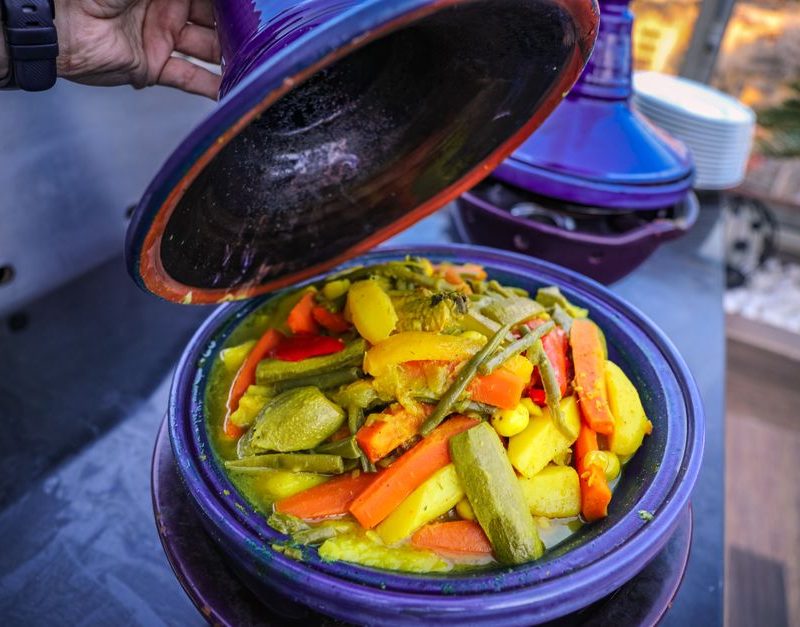
A Moroccan-spiced vegetable tagine brings together tender vegetables, chickpeas and a fragrant tomato sauce, with dried apricots adding small pockets of sweetness. This version uses an ordinary lidded casserole, so you can make it without a traditional clay tagine. The emphasis is on a gentle simmer and a bright lemon finish: enough time for the vegetables to absorb the spices while keeping their shapes and individual textures.
Serve it in generous bowls with couscous or bread to catch the sauce. The mild spice mixture leaves room for everyone to add a little heat at the table. This is a home-kitchen interpretation inspired by Moroccan flavours, using ingredients that are straightforward to find and prepare.
Moroccan-Spiced Vegetable Tagine
Serves: 4. Preparation: about 20 minutes. Cooking: about 45 minutes. You will need a large, heavy-based casserole or saucepan with a well-fitting lid. A broad pan helps the vegetables cook evenly without needing too much stirring.
Ingredients
- 2 tablespoons olive oil
- 1 large onion, finely sliced
- 3 garlic cloves, finely chopped
- 20g fresh ginger, peeled and finely grated
- 2 teaspoons ground cumin
- 2 teaspoons ground coriander
- 1 teaspoon sweet paprika
- Half a teaspoon ground turmeric
- Half a teaspoon ground cinnamon
- 1 tablespoon tomato purée
- 400g peeled, deseeded butternut squash, cut into roughly 2.5cm chunks
- 2 medium carrots, cut into thick slices
- 1 red pepper, deseeded and cut into chunky pieces
- 1 courgette, cut into thick half-moons
- 1 x 400g tin chopped tomatoes
- 300ml reduced-salt vegetable stock, plus extra if needed
- 1 x 400g tin chickpeas, drained and rinsed
- 60g dried apricots, quartered
- 1 small lemon, zest finely grated and juice reserved
- A small handful of fresh coriander, roughly chopped
- Black pepper and salt, to taste
To serve: couscous prepared according to its packet instructions, or warm flatbreads. Plain yoghurt and toasted flaked almonds are optional toppings; use a suitable plant-based yoghurt if you want to keep the meal vegan.
Method
- Soften the onion. Warm the olive oil in your casserole over a medium-low heat. Add the onion and cook for 8–10 minutes, stirring occasionally, until soft and starting to turn golden at the edges. If it catches, add a tablespoon of water and lower the heat.
- Build the fragrant base. Stir in the garlic and ginger and cook for 1 minute. Add the cumin, ground coriander, paprika, turmeric and cinnamon, then stir for about 30 seconds. Mix in the tomato purée and cook for another minute, keeping everything moving so the spices do not burn.
- Start the firmer vegetables. Add the squash, carrots and red pepper. Turn them through the spiced onion mixture, then pour in the chopped tomatoes and stock. Scrape the base of the pan to release any sticky bits. Bring just to a simmer, cover and cook gently for 15 minutes.
- Add the remaining ingredients. Fold in the courgette, chickpeas and dried apricots. Replace the lid and simmer for another 15–20 minutes, until the squash and carrots are tender when pierced with a knife. Stir gently once or twice and add a splash of stock or water if the base looks dry.
- Adjust the sauce. If the vegetables are tender but the sauce is thin, remove the lid and simmer for 5–10 minutes. The finished sauce should coat the vegetables while leaving enough liquid to spoon over couscous. Avoid vigorous boiling, which can break up the squash.
- Finish and serve. Stir in the lemon zest and 1 tablespoon of lemon juice. Taste before adding more juice, black pepper or salt. Scatter over the fresh coriander and serve with your chosen accompaniment, offering yoghurt or almonds separately if using.
Getting the vegetable texture right
Cutting vegetables thoughtfully matters more than making every piece identical. Squash needs fairly substantial chunks so it stays intact, while carrots benefit from slightly smaller pieces because they can take longer to soften. Thick courgette half-moons hold their shape better than thin slices, especially when you plan to reheat a portion.
Add the courgette later, as directed, rather than putting everything into the pot together. The squash and carrots need a head start; the courgette needs just enough time to become tender. Check a carrot slice as well as a piece of squash before deciding the tagine is ready.
Keep the simmer quiet, with occasional bubbles rather than a rolling boil. A fitted lid traps moisture, so you do not need to submerge the vegetables. Different pans lose liquid at different rates: look under the lid occasionally and judge the sauce by its consistency, adding small splashes rather than a large pour.
Balancing sweetness, spice and lemon
The apricots soften in the sauce and complement the squash without needing added sugar. Quartering them spreads their flavour throughout the pot. If yours are particularly firm, they may need a few extra minutes of gentle cooking; test a piece before serving.
Cinnamon should sit behind the cumin and coriander rather than dominate them. Measure it carefully, and use sweet paprika for warmth without much heat. If you enjoy chilli, offer chilli flakes at the table or stir a small pinch into your own bowl.
Lemon goes in at the end so you can adjust the finished dish. Begin with the measured tablespoon of juice, stir and taste a spoonful of sauce with a piece of vegetable. Add more in small amounts if it tastes too sweet or needs a fresher finish.
Serving ideas
Fluffy couscous is an easy partner because it absorbs the fragrant sauce. Prepare it separately while the tagine finishes cooking, loosening it with a fork before serving. For another option, spoon the vegetables over cooked bulgur wheat or serve with warm flatbread.
A spoonful of plain yoghurt brings a cool contrast, while toasted almonds provide crunch. A simple cucumber salad also works well alongside the soft vegetables. Keep accompaniments fairly plain so the ginger, spices and lemon remain easy to taste.
Simple variations
- Use sweet potato: replace the squash with the same weight of peeled sweet potato. Cut it into similar chunks and begin checking for tenderness early, as it may soften faster.
- Change the dried fruit: swap the apricots for 40g raisins. They distribute more evenly through the sauce, giving smaller bursts of sweetness.
- Try cauliflower: replace the courgette with 250g cauliflower florets. Add them with the chickpeas and simmer until the stalks are tender.
- Choose parsley: use flat-leaf parsley instead of fresh coriander if you prefer its flavour. Add it just before serving.
Storing and reheating
Divide leftovers into shallow containers so they cool promptly, then refrigerate within two hours. Eat within two days, or freeze in individual portions for up to three months. Store couscous separately and follow its packet guidance for cooling and storage.
Defrost frozen tagine in the fridge before reheating. Warm it in a saucepan with a splash of water, stirring gently until steaming hot throughout. Reheat only the amount you need, and only once. Add fresh herbs after reheating to restore a little brightness to the bowl.