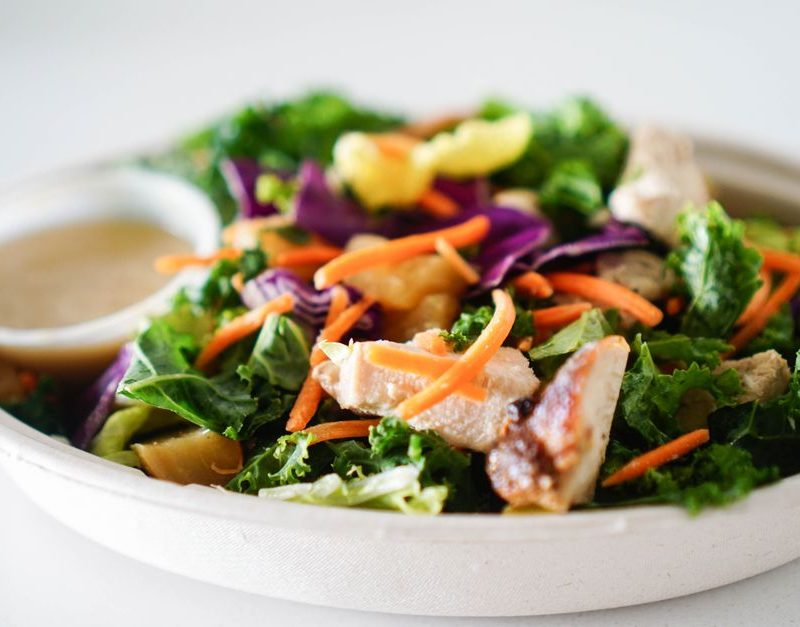
A kale, apple and walnut salad is all about contrast: tender green leaves, crisp slices of apple and toasted nuts that give each forkful a little crunch. A mustard and cider vinegar dressing brings everything together without hiding the individual flavours. The useful trick is to soften the kale before adding the other ingredients, so you get a salad that is pleasant to eat rather than a bowl of tough leaves.
This version keeps the ingredient list short and lets you adjust the final balance to suit your apples. Serve it alongside a warm main course, or add chickpeas and bread for a more substantial lunch. Kale holds its texture after dressing, making it handy when you want to prepare part of a meal ahead.
Kale, Apple and Walnut Salad
Serves: 4 as a side or 2 as a light lunch with additions. Preparation: about 20 minutes, plus resting. Cooking: 3–5 minutes for the walnuts.
Ingredients
- 200g kale leaves, weighed after removing the thick stalks
- 2 medium crisp eating apples
- 60g walnut halves, roughly broken
- 1 tablespoon lemon juice
- A small pinch of salt
- Freshly ground black pepper
For the dressing
- 2 tablespoons olive oil
- 1 tablespoon cider vinegar
- 1 teaspoon Dijon mustard
- 1 teaspoon honey or maple syrup
- 1 tablespoon water, plus extra if needed
Curly kale works well, as does cavolo nero sliced into narrow ribbons. Choose firm eating apples that you enjoy raw. A sharp apple gives a brisker salad, while a sweeter one makes the dressing taste rounder. There is no need to peel them unless you prefer to.
How to make it
- Prepare the leaves. Wash the kale and drain thoroughly. Dry it in a salad spinner or pat dry with a clean tea towel. Pull the leaves away from any thick central stalks, then tear or slice into small, manageable pieces. Put them in a large bowl.
- Toast the walnuts. Put the nuts in a dry frying pan over a medium-low heat. Toast for 3–5 minutes, stirring frequently, until fragrant and slightly darker. Watch closely towards the end, as small pieces can catch quickly. Tip onto a plate and leave to cool.
- Mix the dressing. Whisk the olive oil, cider vinegar, mustard, honey or maple syrup and water together in a small bowl. Add black pepper. The dressing should pour easily; whisk in another teaspoon of water if it seems thick.
- Soften the kale. Sprinkle the pinch of salt over the leaves and add half the dressing. With clean hands, gently squeeze and rub the kale for 1–2 minutes. Stop when the leaves look darker and feel softer, but still have some spring. Leave for 5–10 minutes.
- Slice the apples. Quarter and core the apples, then slice thinly or cut into small bite-sized pieces. Toss with the lemon juice in a separate bowl, coating the cut surfaces.
- Assemble the salad. Add the apples and any lemon juice left in their bowl to the kale. Pour over the remaining dressing and toss thoroughly. Fold through most of the cooled walnuts, keeping a few for the top.
- Taste and serve. Try a forkful containing both kale and apple before adjusting the seasoning. Add a little pepper or a small splash of water if needed. Scatter over the reserved walnuts and serve.
Small details that improve the texture
Remove the woody stalks
The thick centre stalk can stay chewy even when the leaves have softened. Removing it makes more difference than massaging the whole leaf for longer. If your kale comes ready chopped, check through the bag for chunky pieces of stalk before starting. Small, tender stems can stay.
Dry the leaves properly
Water clinging to the kale dilutes the dressing and can collect at the bottom of the bowl. Give it a good spin, or spread it over a clean tea towel and blot gently. You do not need perfectly dry individual leaves, but they should not be dripping when they go into the bowl.
Massage gently, then pause
You are aiming to make the leaves easier to chew while keeping their shape. A brief massage followed by a rest usually works better than vigorous squeezing. Taste a piece before adding the apples: if it still feels too firm, give it another gentle rub and a few more minutes.
Balance the dressing around your apples
Apples vary, so use the first dressed forkful as your guide. If the salad tastes very sharp, stir a little extra honey or maple syrup into a spoonful of water before tossing it through. Add it gradually; the apple should still provide most of the sweetness.
If the flavour seems flat, a few drops of cider vinegar may help. Taste the walnuts, kale and apple together before adding more salt. For a milder mustard flavour, start with half the Dijon, then add the rest only if you want it.
What to serve alongside
For lunch, fold in a drained and rinsed 400g tin of chickpeas, then serve with wholemeal bread. The chickpeas make the salad more substantial without adding another cooking step. Toss them with the kale before adding the apples so they pick up some dressing.
As a side dish, try this salad with roast chicken, baked potatoes or a vegetable tart. Keep the apples in small pieces if serving it in a shared bowl, so everyone can easily scoop up a mix of ingredients. Add the final walnuts just before taking it to the table.
Simple variations
- Add cheese: crumble over 50g feta or some mature Cheddar for a savoury finish. Taste before adding extra salt.
- Swap the nuts: use pumpkin or sunflower seeds. Toast briefly and cool before adding.
- Try pear: replace one apple with a firm pear, folding it in gently so the slices keep their shape.
- Make it vegan: choose maple syrup for the dressing and leave out any dairy additions.
Preparing ahead and storing
You can wash, dry and chop the kale, mix the dressing and toast the walnuts ahead. Keep the kale and dressing in separate covered containers in the fridge. Once completely cool, keep the walnuts in an airtight container until serving. Slice the apples close to assembly for the crispest result.
Refrigerate leftover assembled salad promptly in a covered container and eat within two days. The leaves soften further and the walnuts lose some crunch, so it is best freshly assembled. Toss leftovers before serving and add a few freshly toasted nuts if you have them. Freezing is unsuitable because the raw apples and dressed leaves lose their texture.