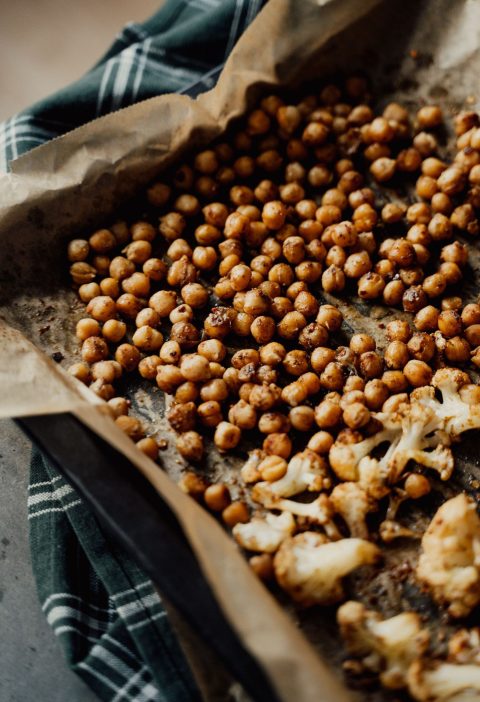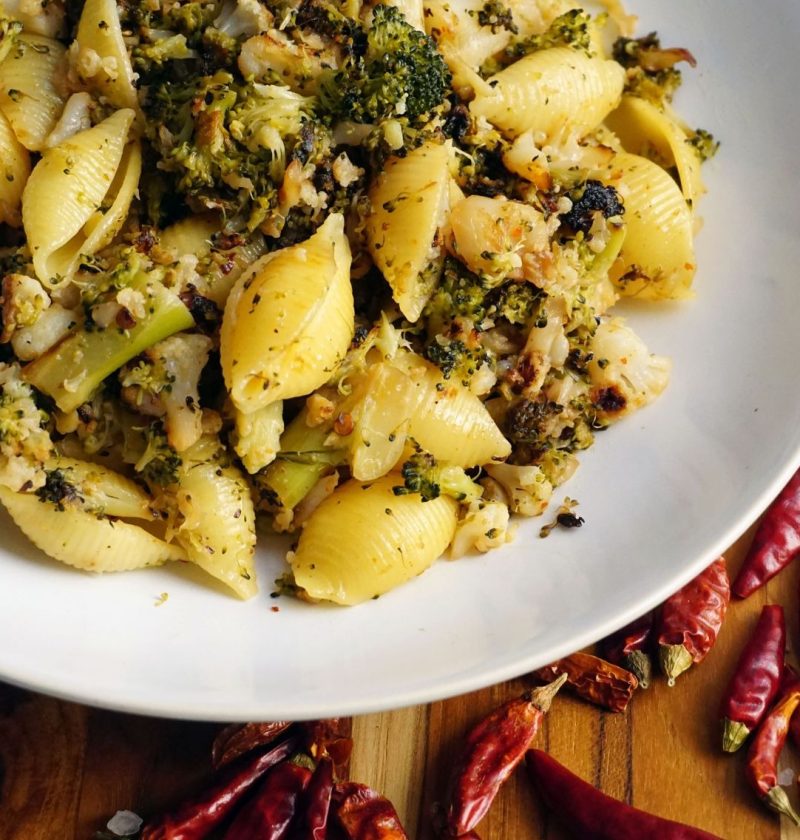
Whole-wheat pasta, broccoli, and chickpeas make a satisfying combination when the sauce is light enough to coat rather than bury them. Garlic-infused olive oil, lemon, and a little starchy pasta water create that coating. Toasted breadcrumbs provide a crisp finish, making a small amount of topping feel purposeful rather than incidental.
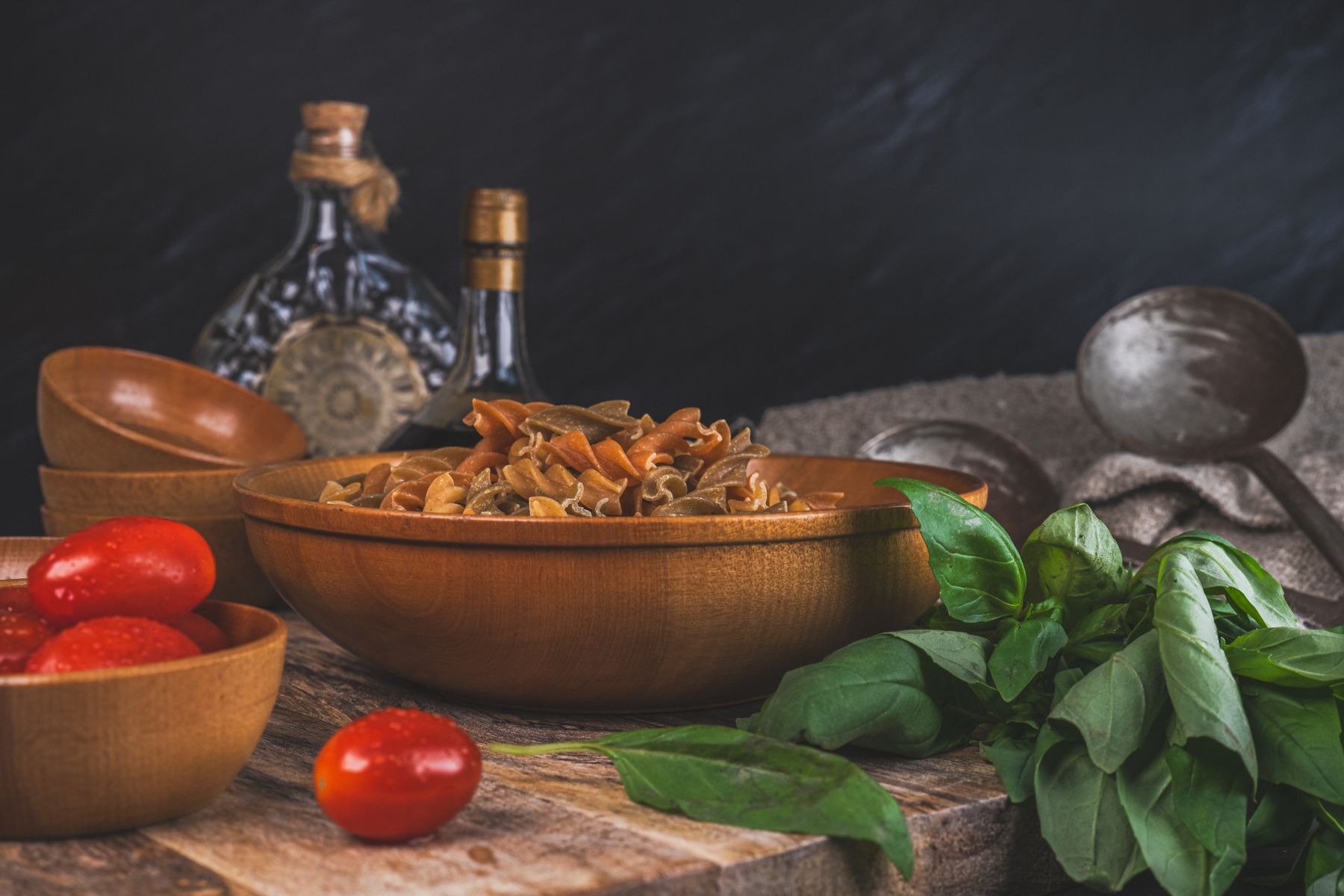
The broccoli cooks in the pasta pot during the last few minutes, reducing the number of pans without sacrificing control. Chickpeas warm separately in the skillet, where some are gently mashed to help the sauce cling. The finished pasta should look glossy and loose, with enough moisture to remain pleasant after it reaches the table.
Servings, Timing, and Equipment
Makes 4 servings. Allow 15 minutes for preparation and 20 minutes for cooking, approximately 35 minutes total. Use a large pasta pot, a deep 12-inch skillet, a colander, and a heatproof measuring cup for reserved cooking water. Set the colander in the sink before draining, and keep the reserved water away from the edge of the counter.
Ingredients
- 10 ounces whole-wheat penne, fusilli, or other short pasta
- 1 pound broccoli, cut into small florets and thinly sliced tender stems
- 1 can chickpeas, 15 ounces, drained and rinsed
- 3 tablespoons olive oil, divided
- 3 garlic cloves, thinly sliced
- 1/4 teaspoon chili flakes, optional
- 1/3 cup plain dried breadcrumbs
- 1 teaspoon finely grated lemon zest
- 2 tablespoons fresh lemon juice
- 1/4 teaspoon fine salt for the skillet, plus 1 teaspoon for the pasta water
- 1/4 teaspoon black pepper
- 1/4 cup grated Parmesan, optional
- 2 tablespoons chopped parsley
- Up to 1 cup reserved pasta water, added gradually
Plan the Broccoli and Pasta Timing
Read the pasta package before starting and note its suggested cooking range. The broccoli will need about 3 to 4 minutes in the boiling water, so add it that long before the pasta is expected to be ready. If the pasta has a very short cooking time, cook the broccoli separately rather than trying to force both ingredients into the same schedule.
Keep florets around 1 inch wide, and peel thick stalks before slicing. Broad, thick stems take longer than the tops. Zest the lemon before juicing it, and reserve the zest for the breadcrumbs so the topping has a fresh aroma. Drain chickpeas well to prevent unnecessary splattering when they enter the skillet.
Numbered Cooking Steps
- Bring a large pot of water to a boil and add 1 teaspoon salt. Meanwhile, heat 1 tablespoon olive oil in the skillet over medium heat. Add breadcrumbs and stir for 2 to 4 minutes until golden. Transfer to a bowl and mix with lemon zest.
- Add pasta to the boiling water and stir. Set a timer based on the package, planning to add broccoli for the last 3 to 4 minutes.
- Put the remaining 2 tablespoons oil in the skillet over medium-low heat. Add garlic and optional chili flakes. Cook for 1 to 2 minutes, stirring, until fragrant but not browned.
- Add chickpeas, the skillet salt, black pepper, and 1/4 cup water from the pasta pot. Mash roughly 1/4 cup chickpeas with the back of a spoon. Simmer gently for 3 minutes.
- Add broccoli to the pasta pot at the planned point. Before draining, scoop out 1 cup cooking water. Drain when the pasta has no hard center and the broccoli is tender with a little bite.
- Transfer pasta and broccoli to the skillet. Add lemon juice and 1/4 cup reserved water. Toss over medium heat for 1 to 2 minutes, adding more water in small splashes until glossy. Fold in optional Parmesan and parsley, then top individual bowls with lemon crumbs.
Doneness and Sauce Consistency
Whole-wheat pasta often has a firmer texture than refined pasta, but it should not be chalky in the center. Taste a piece before draining. Broccoli should yield to a fork without turning into tiny green fragments during tossing. Cooking times vary by shape and brand, so check both ingredients instead of treating the timer as the only guide.
The sauce may seem almost too loose in the skillet, then tighten quickly as the pasta absorbs water. Add reserved water gradually and toss thoroughly between additions. If adding Parmesan, lower the heat so it melts into the moisture instead of clumping against a very hot pan. Keep breadcrumbs out until serving so they stay crisp.
Substitutions and Serving Options
Use white beans instead of chickpeas, stirring gently because they break more readily. Replace broccoli with chopped green beans and cook until tender. Gluten-free pasta and appropriate breadcrumbs can be used, but cook them according to their own instructions and avoid assuming the same boiling window. Omit Parmesan for a dairy-free dish and add an extra tablespoon parsley.
A simple tomato salad works well alongside. If skipping breadcrumbs, use 2 tablespoons toasted chopped almonds for crunch, accounting for nut allergies. Avoid adding a second heavy sauce; the lemon, garlic, and chickpea mixture is designed to remain light and cohesive on its own.
Storage and Reheating
Refrigerate pasta promptly in shallow containers at 40 F or below, within 2 hours, or 1 hour above 90 F. Use within 3 to 4 days. Store crumbs separately in a dry container. Reheat pasta with a splash of water, stirring until it reaches 165 F throughout, then add crumbs. Freeze for up to 1 month for quality, accepting softer broccoli. See USDA leftover guidance.