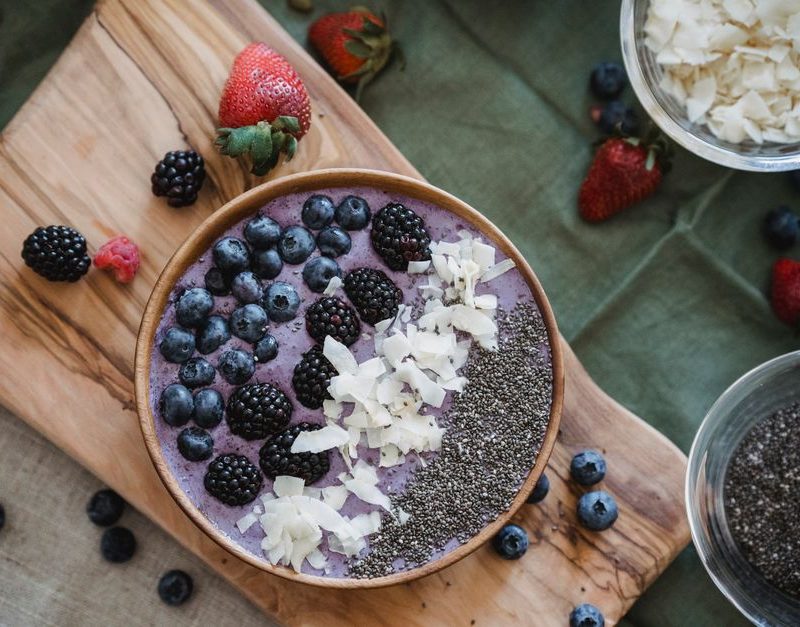
Overnight chia pudding with berries is a cool, spoonable breakfast that takes a little stirring in the evening and very little attention the next morning. Chia seeds absorb liquid as they sit, creating a soft gel without cooking. Here, milk and plain yoghurt give the pudding a creamy base, while berries bring freshness and a welcome contrast to the gentle vanilla flavour.
The useful trick is to stir twice before leaving it in the fridge. That second stir breaks up clusters while the seeds are beginning to swell, so you get an even pudding rather than a thick layer at the bottom. This recipe makes two portions, with the fruit kept separate until serving so you can adjust the texture and toppings each morning.
Overnight chia pudding with berries
Makes: 2 portions. Preparation: about 10 minutes, plus a 10-minute pause between stirring. Chilling: at least 6 hours, preferably overnight.
You need a mixing bowl, a whisk or fork, and two clean containers with lids. Small jars are useful, but ordinary food containers work just as well. Choose containers with room for stirring and toppings; filling a narrow jar right to the rim makes breakfast unnecessarily fiddly.
Ingredients
- 50 g chia seeds
- 250 ml semi-skimmed milk, or an unsweetened plant drink
- 100 g plain natural yoghurt, plus extra to serve if wanted
- Half a teaspoon vanilla extract
- 1–2 teaspoons maple syrup or honey, optional
- 200 g fresh mixed berries, such as strawberries, raspberries and blueberries
- 1 tablespoon chopped almonds or pumpkin seeds, optional, to serve
Black and white chia seeds both work here. Use whichever you already have. A thicker Greek-style yoghurt produces a firmer result than a runnier natural yoghurt, so keep a little extra milk available for loosening the pudding after chilling.
Method
- Mix the liquid ingredients. Put the milk, yoghurt and vanilla in a bowl. Add one teaspoon of maple syrup or honey if using, then whisk until smooth. Breaking up the yoghurt now makes it easier to distribute the chia seeds evenly.
- Add the chia seeds. Sprinkle them into the bowl while whisking. Stir thoroughly, scraping around the sides and across the bottom. All the seeds should be wet, with no dry patches clinging to the bowl.
- Pause and stir again. Leave the mixture for 10 minutes, then whisk firmly once more. It will already be starting to thicken. Break apart any soft clusters with the back of a spoon and stir them through.
- Portion and chill. Divide between two containers, cover and refrigerate for at least 6 hours or overnight. Keep the berries separate at this stage.
- Prepare the fruit. Before serving, wash the berries under running water and drain well. Hull and chop the strawberries, leaving smaller berries whole. Mash a few raspberries with a fork if you would like some juice to swirl through the pudding.
- Adjust and finish. Stir each pudding. If it is thicker than you like, add milk a tablespoon at a time until it falls softly from the spoon. Taste before adding the remaining sweetener. Divide the berries between the portions and finish with the optional nuts or pumpkin seeds.
Getting the texture right
Chia pudding should be soft enough to stir easily, with the seeds suspended throughout. It will have a lightly gelled texture rather than the smoothness of custard. The exact consistency varies with the yoghurt and milk you choose, and with how long the pudding rests.
If the pudding is too firm
Add a small splash of milk and stir thoroughly before deciding whether it needs more. A pudding that seems solid straight from the fridge often loosens readily. Avoid pouring in a large amount at once, because it is easier to thin a firm pudding than to rescue one that has become watery.
If the pudding is too loose
First give it a good stir and check that it has had the full chilling time. If it remains too runny, stir one teaspoon of chia seeds into each portion. Refrigerate for another couple of hours and check again. Do not sprinkle extra dry seeds over the top and eat immediately; give them time to absorb the liquid.
If you find clumps
Press soft clumps against the side of the container with a spoon, then stir them back in. For the next batch, add the seeds gradually and remember the second stir. Shaking a sealed jar can help with the initial mixing, but a spoon is better for finding seeds caught at the bottom.
Making the most of the berries
A mixture of berries gives you different textures in each spoonful: juicy strawberry pieces, soft raspberries and firmer blueberries. You do not need all three. Use a single berry if that is what you have, and let its ripeness guide how much sweetener you add.
For a simple fruit layer, mash half the berries roughly and leave the rest whole or chopped. Spoon the mashed fruit over the chilled pudding, then scatter the remaining berries on top. This spreads their flavour through the bowl without turning everything into a uniform purple mixture.
Frozen berries are another option, but check the packet instructions carefully. Some need cooking before eating. Prepare them as directed, cool any cooked fruit promptly and refrigerate it separately. Spoon the chilled berries and a little of their juice over the pudding when serving.
Simple variations
- Dairy-free vanilla: use an unsweetened plant drink and plain plant-based yoghurt. Their thickness varies, so adjust with an extra splash of drink after chilling.
- Lemon and blueberry: add half a teaspoon of finely grated lemon zest to the base and use blueberries for the topping. Wash the lemon before zesting and avoid the bitter white pith.
- Cinnamon and strawberry: replace the vanilla with a quarter of a teaspoon of ground cinnamon. Top with chopped strawberries and the optional almonds.
- Raspberry ripple: mash the raspberries and fold them through just before eating, leaving visible streaks. Add a spoonful of plain yoghurt on top if you like a tangier finish.
Serving and storing
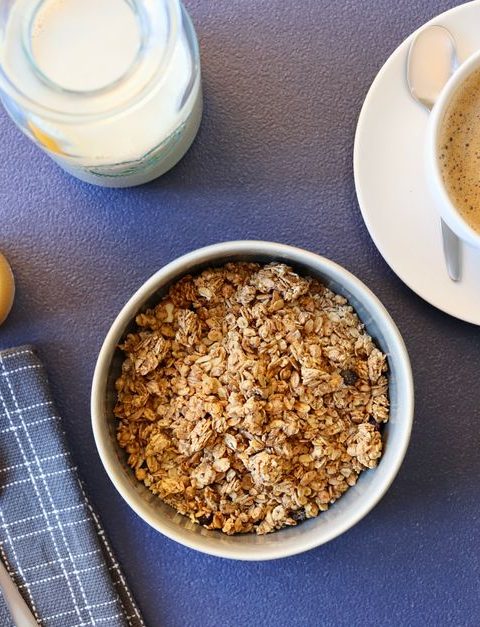
Serve the pudding chilled, with the berries added just before eating. If you want a more substantial breakfast, have it alongside wholemeal toast or add a spoonful of oats-based granola at the table. Keep crunchy toppings separate until the last moment so they retain their bite.
Store the covered pudding in the fridge and eat within two days, or sooner if the milk or yoghurt needs using first. Keep washed fruit in a separate covered container and use it promptly. Stir the pudding before serving, as it can become firmer while stored.
For breakfast away from home, pack the fruit separately or add it immediately before leaving. Keep the pudding refrigerated until departure and use an insulated bag with an ice pack during travel. Once you arrive, put it in a fridge if one is available. A little evening preparation then leaves you with a breakfast that is ready to stir, top and enjoy.