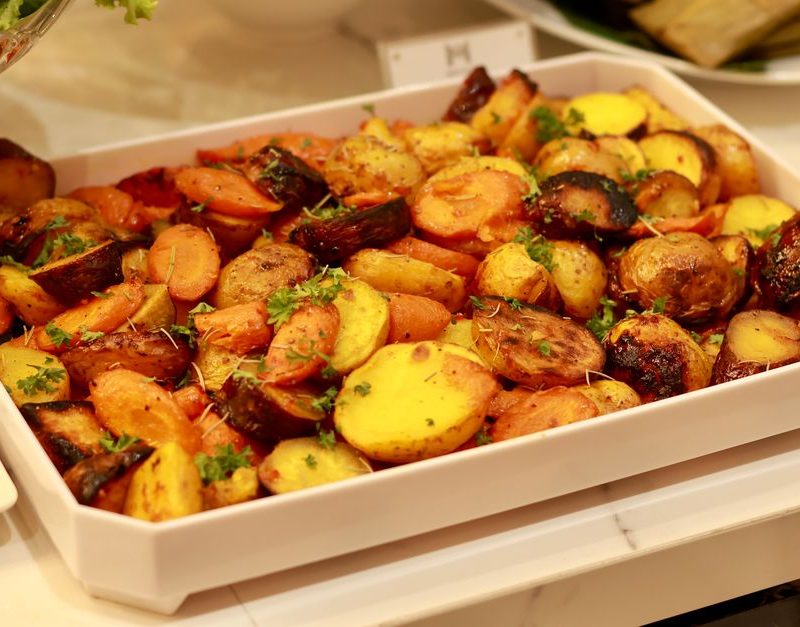
Roasted root vegetables with rosemary make a generous side dish with very little fuss. Carrots, parsnips and swede develop golden edges in the oven, while their centres become soft enough to cut with a fork. Rosemary gives the tray a savoury fragrance, and a little lemon juice brightens everything just before serving.
This recipe is built around those three roots, with each cut to suit its cooking time. The dense swede goes into smaller pieces than the carrots and parsnips, helping everything finish together. There is no glaze to prepare and no need to parboil. Give the vegetables room on their trays, turn them once, and let the oven do most of the work.
Roasted Root Vegetables With Rosemary
Serves: four as a generous side dish. Preparation time: about 20 minutes. Cooking time: 40 to 50 minutes. You will need two large, shallow roasting trays and a large mixing bowl.
Ingredients
- 400 g carrots
- 350 g parsnips
- 350 g swede, weighed after peeling
- 3 tablespoons olive oil
- 2 tablespoons finely chopped fresh rosemary leaves
- Half a teaspoon fine salt, or less to taste
- Freshly ground black pepper
- 1 tablespoon lemon juice, plus extra to taste
The weights do not need to be exact to the gram. A slightly larger carrot or smaller parsnip will work perfectly well. Keep the overall quantity similar, though, because extra vegetables need extra tray space. Packing more into the same dish makes it harder to achieve browned edges.
Prepare the vegetables
Scrub the carrots and parsnips under running water and trim their ends. Peel them if you prefer, or leave thin, sound skins in place. Peel the swede thoroughly to remove its tough outer skin. Before slicing it, make a flat base so it sits securely on your chopping board.
Cut the swede into cubes about 1.5 cm across. Cut the carrots into batons about 5 cm long and 2 cm thick. Cut the parsnips into similar batons, dividing thick tops lengthways. Remove any hard, woody core from particularly large parsnips. Try to keep pieces of each vegetable reasonably consistent so you do not have tiny tips burning beside thick chunks.
If the vegetables are wet after washing, pat them dry with a clean tea towel. Strip the rosemary leaves from their woody stalks and chop finely. Small pieces of rosemary spread through the oil more evenly and are easier to eat than whole leaves.
Method
- Heat the oven to 220 degrees Celsius, or 200 degrees Celsius fan. Arrange the shelves so there is room around both roasting trays for hot air to circulate.
- Put the prepared vegetables into a large bowl. Add the olive oil, rosemary, salt and a few grinds of black pepper. Toss thoroughly, bringing the pieces at the bottom up to the top until everything has a light coating.
- Divide between the two trays. Spread the vegetables in a single layer with small gaps between pieces. Put a flat cut surface against the metal wherever practical. Scrape any remaining oil and rosemary from the bowl over the vegetables.
- Roast for 20 minutes without stirring. Turn with a spatula, gently releasing any browned surfaces from the trays. Swap the trays between shelves and rotate them if your oven cooks more strongly at the back.
- Roast for another 20 to 30 minutes. Check towards the end and remove any pieces that are already tender and well coloured. The largest swede cubes should be easy to pierce with a small knife.
- Transfer to a serving dish, add the lemon juice and toss gently. Taste before adding more seasoning. Serve straight away for the best contrast between tender centres and browned edges.
Small details that improve the tray
Give the vegetables enough space
Shallow metal trays allow moisture to escape readily. A deep dish filled with overlapping vegetables tends to produce a softer result. If your trays are small, roast in batches. You can keep the first batch warm briefly while the second finishes, although the edges will soften a little as they stand.
Use tenderness as well as colour
Golden edges do not always mean the centre is cooked. Swede is the piece to test first because it is dense. If the vegetables are colouring quickly but still feel firm, reduce the oven temperature slightly and give them longer. Next time, cut the swede smaller rather than increasing the cooking time for everything.
Keep the rosemary balanced
Rosemary has a strong flavour, especially when chopped finely. If you prefer a gentler result, start with one tablespoon of fresh leaves. Avoid scattering woody stalks over the finished dish. Lemon juice belongs at the end, where you can taste its effect and add more gradually without soaking the vegetables before roasting.
Serving ideas
Serve the roots alongside roast chicken, baked fish or a lentil loaf. Steamed cabbage, broccoli or peas add a different texture to the plate. The rosemary already provides plenty of flavour, so a simple accompaniment often works best.
For a meat-free main, spoon the vegetables over cooked green lentils and finish with rocket and a little crumbled feta. Alternatively, serve them with butter beans and a dressing made from plain yoghurt, lemon juice and black pepper. Add the dressing at the table so the vegetables keep their browned surfaces for longer.
Smaller pieces also fit neatly into a warm wholemeal pitta with hummus and shredded lettuce. Chop any large batons before filling, and avoid overloading the bread. This is a useful way to turn a modest portion of leftover roots into lunch.
Simple variations
- Dried rosemary: replace the fresh leaves with 2 teaspoons dried rosemary, crushed lightly between your fingers.
- Celeriac instead of swede: use the same prepared weight, cut into small cubes. Check tenderness during cooking. Celeriac is a celery allergen.
- A mustard finish: stir 1 teaspoon Dijon mustard into the lemon juice before tossing it through the cooked vegetables.
- A smaller portion: halve all the ingredients and use one large tray. Start checking after 35 minutes, but judge readiness by colour and tenderness.
Storage and reheating
Cool leftovers promptly in shallow containers and refrigerate within two hours. Eat within two days. Reheat only the portion you need, spreading the vegetables over a tray in an oven heated to 200 degrees Celsius, or 180 degrees Celsius fan. Allow around 15 to 20 minutes, checking that every piece is steaming hot throughout.
You can also freeze cooled portions in suitable containers. Defrost in the fridge and reheat until steaming hot throughout. The texture will be softer after freezing, making these roots useful for blending into a vegetable soup. For the crispest edges, enjoy the first serving fresh from the oven, with the lemon added just before it reaches the table.