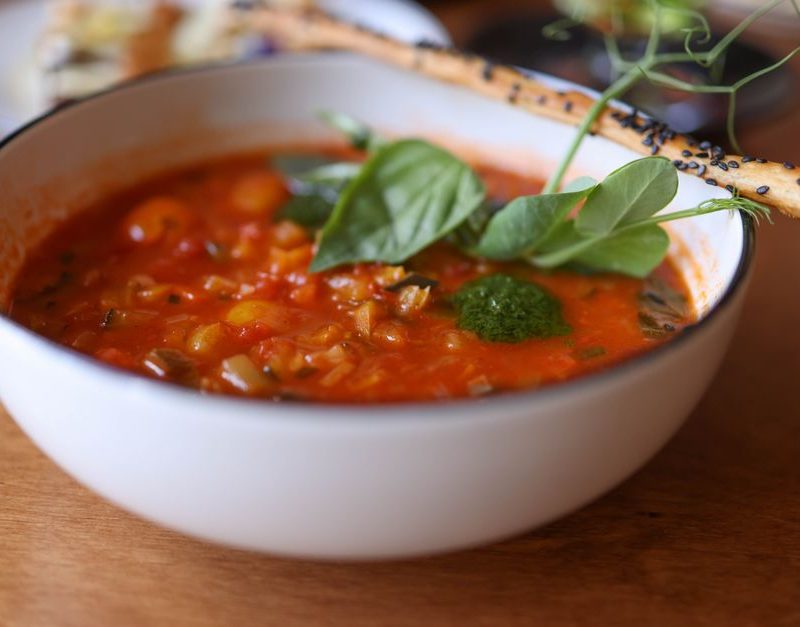
Minestrone with beans and greens is a generous vegetable soup with enough substance to make a meal. Tender beans, small pasta shapes and leafy greens sit in a tomato broth, while softened onion, carrot and celery give the pot its savoury foundation. This version keeps the vegetables in recognisable pieces and cooks the pasta separately, so you can choose how much to add to each bowl without losing the soup’s brothy character.
It is a useful recipe for an ordinary evening when you want something warm and satisfying from familiar ingredients. There is no need to blend anything or prepare several accompaniments. Give the vegetables a little attention at the start, then let the saucepan do most of the work. A squeeze of lemon and a handful of parsley bring everything into focus just before serving.
Minestrone With Beans and Greens
Serves: 4 generously. Preparation: about 20 minutes. Cooking: about 35 minutes. You will need a large saucepan with a lid, a smaller pan for the pasta, a chopping board and a sharp knife.
Ingredients
- 2 tablespoons olive oil
- 1 large onion, finely chopped
- 2 medium carrots, cut into small dice
- 2 celery sticks, finely sliced
- 3 garlic cloves, finely chopped
- 1 tablespoon tomato purée
- 1 teaspoon dried oregano
- 1 bay leaf
- 1 tin chopped tomatoes, 400g
- 1 litre reduced-salt vegetable stock, plus extra hot water if needed
- 1 medium courgette, cut into small dice
- 2 tins cannellini beans, 400g each, drained and rinsed
- 120g small dried pasta shapes, such as small shells or macaroni
- 150g kale, tough stalks removed and leaves finely shredded
- 2 tablespoons chopped flat-leaf parsley
- 1 tablespoon lemon juice, plus more to taste
- Freshly ground black pepper and salt, to taste
- Vegetarian Italian-style hard cheese, finely grated, to serve, optional
Method
- Heat the olive oil in the large saucepan over a medium-low heat. Add the onion, carrots and celery. Cook for 10–12 minutes, stirring regularly, until the onion is soft and the vegetables have begun to soften. If they catch on the base, lower the heat and add a small splash of water.
- Add the garlic, tomato purée and oregano. Stir for 1–2 minutes, keeping everything moving so the garlic does not burn. The purée should coat the vegetables and darken slightly.
- Pour in the chopped tomatoes and vegetable stock. Add the bay leaf and a few grinds of black pepper. Stir across the bottom of the pan to loosen any cooked-on tomato, then bring to a gentle simmer.
- Add the courgette and drained beans. Partly cover and simmer gently for 12–15 minutes, stirring occasionally, until the carrots are tender and the courgette is cooked but still holds its shape.
- Meanwhile, cook the pasta in the smaller pan according to the packet instructions, stopping when it is just tender. Drain. If you are serving all the soup straight away, keep the pasta ready to divide between the bowls.
- Stir the shredded kale into the soup and simmer for another 5–8 minutes, until tender. Add a splash of hot water if the broth has reduced too much. Remove and discard the bay leaf.
- Stir in the parsley and lemon juice. Taste before adding salt, as the stock may provide enough seasoning. Divide the cooked pasta between four bowls, ladle the hot soup over it and finish with the optional grated cheese.
Build flavour before adding the broth
The first stage matters more than adding extra seasonings at the end. Onion, carrot and celery need time to soften in the oil, which rounds out their flavour and gives the broth a more satisfying base. Keep the heat gentle enough that they soften without developing dark edges. Chop the carrots fairly small so they become tender within the cooking time.
Briefly cooking the tomato purée with the vegetables helps it spread through the oil before the liquid goes in. Once you add the stock, aim for a quiet simmer. A fierce boil can break up the beans and make the courgette collapse before the carrots are ready. Test a piece of carrot with a fork rather than relying only on the clock.
Keep the pasta and greens at their best
Small pasta shapes are easy to eat with a spoon, but they continue absorbing broth as they stand. Cooking them separately gives you control over the final texture, especially if people eat at different times. You can add a smaller spoonful to one bowl and more to another without changing the whole saucepan.
Kale needs longer than delicate leaves, so check that it is tender before serving. Remove thick stalks and shred the leaves into short strips rather than leaving large pieces. If you prefer spinach, use the same weight and stir it in for the final 1–2 minutes, just until wilted. Avoid adding either green at the beginning, when the longer cooking would dull its colour and texture.
Serving your minestrone
Serve in deep bowls with the pasta underneath and plenty of broth around the vegetables. The beans and pasta make this a substantial lunch or supper, so bread is optional. If you would like some, a slice of wholemeal toast is useful for catching the last spoonfuls. Put extra lemon wedges and black pepper on the table so everyone can adjust their own bowl.
For a dairy-free finish, leave out the cheese and add a little more parsley. If you use cheese and want the dish to remain vegetarian, check that it is made with vegetarian rennet. Taste the soup before adding any salty topping: a bright squeeze of lemon may be all it needs.
Simple variations
- Change the beans: use drained tinned borlotti or butter beans in place of cannellini beans. Stir larger beans gently to keep them intact.
- Use cabbage: replace the kale with finely shredded Savoy cabbage, adding it for the last 8–10 minutes and checking for tenderness.
- Add gentle heat: stir a small pinch of chilli flakes into the vegetables with the garlic, then taste before adding more.
- Make it gluten-free: choose gluten-free pasta and check the stock label. Cook the pasta separately as directed on its packet.
Storing and reheating
If you expect leftovers, keep some pasta separate from the soup. Divide both into shallow containers so they cool promptly, then refrigerate within two hours. Eat refrigerated leftovers within two days. Reheat only the amount you need, bringing the soup to a simmer and stirring until it is steaming hot throughout. Add the cooked pasta during reheating and check that it is hot too.
You can freeze the cooled soup without pasta in individual portions for up to three months. Leave room in each container for expansion and label it with the contents and freezing date. Defrost in the fridge, then reheat thoroughly and serve with freshly cooked pasta. The greens will be softer after freezing; a little fresh parsley and lemon juice added after reheating will lift the finished bowl.