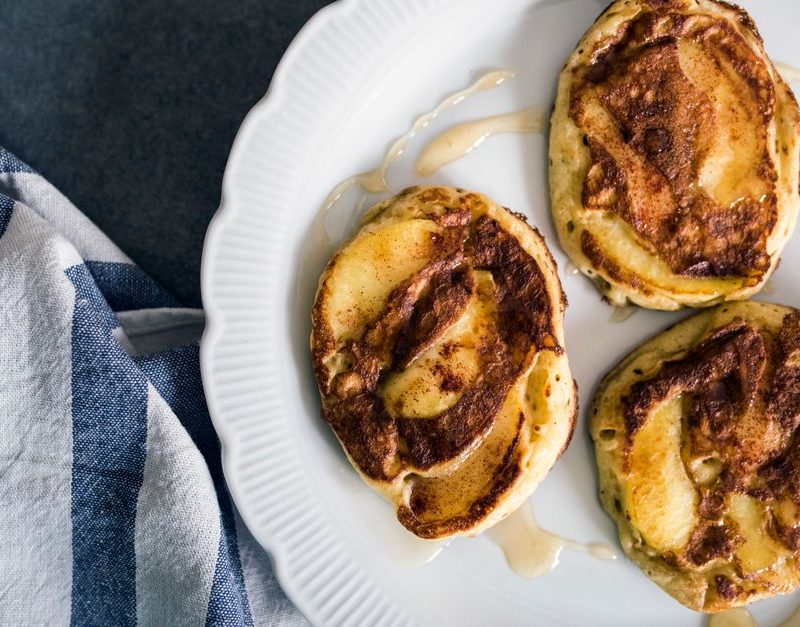
Oat and apple pancakes make a warm breakfast with golden edges, soft middles and little threads of fruit in every bite. This recipe combines finely ground oats with a little plain flour, helping the pancakes hold together while keeping their texture tender. Grated apple brings moisture and sweetness, and cinnamon adds a gentle warmth. Make a batch for a relaxed breakfast, then keep any extras for another morning when you want something warm without starting again from scratch.
Apple inside every pancake
These are small, thick pancakes with apple mixed through the batter. Finely grating the fruit helps it soften during cooking, so you get apple flavour without hard chunks interrupting the texture. Leave the skin on a thin-skinned eating apple if you like, or peel it for a smoother result.
The key is giving the oats time to absorb liquid before you start cooking. A short rest turns a fairly loose mixture into a spoonable batter. Keep the pancakes small and cook them over a moderate heat: oats and apple both hold moisture, so the centre needs time to set before the outside becomes too dark.
Ingredients
Makes about 12 small pancakes, serving 3–4. Allow about 15 minutes for preparing and resting the batter, plus 15–20 minutes for cooking in batches.
- 150 g rolled porridge oats
- 50 g plain flour
- 2 teaspoons baking powder
- 1 teaspoon ground cinnamon
- A small pinch of salt, optional
- 2 medium eggs
- 200 ml milk, plus 1–3 tablespoons if needed
- 1 teaspoon vanilla extract, optional
- 1 medium eating apple, about 150 g before coring
- 2 teaspoons rapeseed oil, plus a little extra if needed, for cooking
To serve, as you like
- Plain yoghurt
- Fresh berries or sliced apple
- Chopped walnuts or pumpkin seeds
- A little maple syrup
You will need a blender or food processor, a grater, a mixing bowl and a large non-stick frying pan. A wide spatula makes turning easier. If you have ready-ground oat flour, use 150 g instead of the rolled oats and skip the grinding step.
How to make the pancakes
- Grind the oats. Blitz the rolled oats in a blender or food processor until they resemble fine flour. A few small flecks are fine, but large flakes make the pancakes more fragile. Tip into a bowl and mix with the plain flour, baking powder, cinnamon and optional salt.
- Prepare the apple. Wash and core the apple, then finely grate it. Keep the juice released during grating. In a separate bowl or jug, beat the eggs with the milk and optional vanilla, then stir in the apple and its juice.
- Combine and rest. Pour the wet mixture into the dry ingredients. Stir until no dry pockets remain, scraping around the bottom of the bowl. Leave the batter for 10 minutes so the oats can absorb some liquid.
- Check the consistency. The batter should fall slowly from a spoon and spread slightly when it lands. If it holds a stiff mound, stir in extra milk one tablespoon at a time. Avoid making it thin enough to run freely around the pan.
- Heat the pan. Warm a non-stick frying pan over a medium-low heat and brush with a little oil. Add a small dab of batter to test the heat. It should sizzle gently rather than darken immediately.
- Cook the first side. Add about 2 tablespoons of batter for each pancake and spread gently to roughly 8 cm across. Leave space between them. Cook for 2–3 minutes, until the edges look set, the underside is golden and a few bubbles appear on top.
- Turn carefully. Slide the spatula fully underneath each pancake and flip. Cook for another 2–3 minutes until the centre is set. Cut open the first pancake to check there is no wet batter inside; lower the heat if the outside browns too quickly.
- Finish the batch. Transfer the cooked pancakes to plates and repeat with the remaining batter, adding a little more oil when needed. Serve warm with your chosen toppings.
Getting a tender middle and golden edges
Choose the right apple
A firm eating apple gives gentle sweetness without adding sugar to the batter. Different apples release different amounts of juice, which is why you adjust the milk after resting. A large cooking apple will give a sharper flavour and may make the batter wetter. For a predictable first batch, stick with an eating apple of roughly the size listed.
Give each pancake time
If a pancake tears as you lift it, it may need longer on the first side. Wait for the edges to lose their wet sheen and use a spatula wide enough to support the middle. Avoid pressing down after turning: this flattens the soft centre without helping it cook evenly.
The batter can thicken while you work through the batches. Stir gently before spooning out more, adding a small splash of milk if necessary. If the pan starts smoking or the pancakes develop very dark patches, take it off the heat briefly and lower the setting before continuing.
Serving ideas
Plain yoghurt adds a cool contrast to the warm pancakes. Add berries for a sharper note, or a few fresh apple slices for crunch. Walnuts and pumpkin seeds bring another texture; put them on the table separately so everyone can choose what suits them.
For a warm topping, gently cook a chopped apple in a small saucepan with a splash of water until soft. Spoon it over the pancakes with its juices. Taste before adding syrup, because the sweetness of the fruit may already be enough for you.
Simple variations
- Pear pancakes: replace the apple with a similar-sized firm pear, cored and finely grated. Check the batter carefully before adding more milk, as pears can release plenty of juice.
- Extra spice: replace half the cinnamon with ground ginger, or add a small pinch of nutmeg.
- With raisins: stir 30 g raisins into the rested batter. Tuck exposed raisins into the mixture in the pan so they are less likely to catch.
- Without dairy: replace the milk with an unsweetened soya or oat drink and use a suitable yoghurt alternative for serving.
Keeping and reheating leftovers
Cool leftover pancakes on a wire rack so steam can escape. Refrigerate in a covered container within two hours and eat within two days. For longer storage, freeze the cooled pancakes in a sealed container with baking paper between layers. Use within two months for the best texture, and defrost in the fridge before reheating.
Warm the pancakes in a frying pan over a low heat, turning occasionally until hot throughout. A microwave works for a small portion too, although the edges will be softer. Reheat only what you plan to eat and only reheat once. Add yoghurt, fruit and other toppings after warming so everything keeps its best texture.