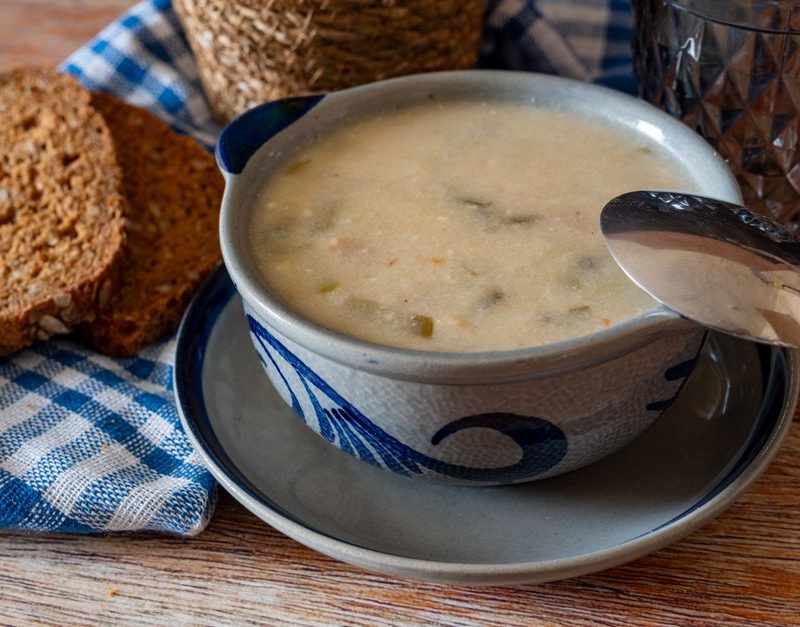
Leek, potato and kale soup turns a handful of everyday vegetables into a warming meal with plenty of texture. Soft leeks give the broth a gentle sweetness, potatoes thicken it naturally, and ribbons of kale add a leafy finish. This version keeps some potato pieces whole, so each spoonful has a mixture of tender vegetables and creamy broth.
The main trick is to cook the vegetables in stages. Give the leeks time to soften, simmer the potatoes until they break easily, then add the greens towards the end. You do not need cream to give the soup body. A little lemon juice lifts the finished flavour, while bread alongside makes a simple, satisfying lunch.
Ingredients for four servings
Allow about 20 minutes to prepare the vegetables and 35 minutes for cooking. You will need a large saucepan with a lid and a potato masher. These quantities make four generous bowls; you can adjust the liquid at the end for a thicker or lighter finish.
- 2 tablespoons olive oil
- 3 medium leeks, about 500g before trimming
- 2 garlic cloves, finely chopped
- 600g floury potatoes, peeled and cut into roughly 2cm pieces
- 1 litre vegetable stock, plus extra hot water if needed
- 1 bay leaf
- 150g kale, weighed after removing tough stalks, finely sliced
- 1 tablespoon lemon juice, or less to taste
- Freshly ground black pepper
- Salt, if needed after tasting
For serving, choose wholemeal bread and, if you like, chopped parsley or a spoonful of plain yoghurt. Keep these additions separate so everyone can finish their bowl as they prefer.
Prepare the vegetables
Clean the leeks between the layers
Cut away the roots and any dry, leathery green ends. Keep the white and tender pale green sections. Split the leeks lengthways and rinse under running water, opening the layers gently with your fingers. Grit can hide inside the folds, so check carefully before slicing across into thin half-moons.
Slice the kale finely
Wash the kale and strip the leaves away from their thick central stalks. Stack a few leaves together, roll them loosely and slice into short ribbons. Smaller pieces soften evenly and fit comfortably on a spoon. If using ready-chopped kale, remove any particularly thick stalk pieces before adding it to the pan.
How to make the soup
- Soften the leeks. Warm the olive oil in a large saucepan over a medium-low heat. Add the leeks and cook for 10 to 12 minutes, stirring regularly, until soft and glossy. Avoid browning them. If they start catching on the bottom, lower the heat and add a tablespoon of water.
- Add garlic and potatoes. Stir in the garlic and cook for one minute. Add the potato pieces and turn them through the leeks. Scrape gently across the base of the pan with your spoon to loosen any vegetables before adding the liquid.
- Simmer the base. Pour in the stock and add the bay leaf. Bring to a gentle boil, then reduce the heat and partly cover the saucepan. Simmer for 15 to 20 minutes, stirring occasionally, until the potatoes break easily when pressed with a fork.
- Mash lightly. Remove and discard the bay leaf. Use a potato masher to crush some of the potatoes directly in the pan, leaving plenty of pieces intact. Stir well to distribute the mashed potato through the broth and check the thickness.
- Cook the kale. Stir in the sliced kale and simmer uncovered for 5 to 8 minutes, until the leaves are tender enough for you. Stir from the bottom as the thicker soup can catch. Add a splash of hot water if necessary.
- Finish and serve. Turn off the heat and add half the lemon juice and some black pepper. Taste before adding the remaining juice or any salt, as the stock may already provide enough seasoning. Ladle into bowls and serve with your chosen accompaniments.
Getting the texture right
Floury potatoes, such as Maris Piper, break down readily and help thicken the broth. Make sure they are completely tender before mashing: firm pieces will not turn into a soft base. If you have waxy potatoes instead, expect a chunkier soup and mash a little more of the mixture.
For a smoother base, take the saucepan off the heat before adding the kale and use a hand blender briefly, keeping its head submerged. Avoid prolonged blending, which can make potato soup gluey. Return the pan to the heat before continuing with the greens.
Make the final liquid adjustment once the kale is cooked. Add hot water or extra stock a little at a time, stirring between additions. Aim for a soup that pours easily from the ladle while still carrying the vegetables. Taste again after thinning, particularly if you have used water.
Serving ideas
Wholemeal toast makes a straightforward accompaniment, especially cut into fingers for dipping. For a more substantial meal, serve a cheese sandwich or a boiled egg alongside. A small spoonful of plain yoghurt gives a cool, tangy contrast; swirl it into individual bowls after serving.
Chopped parsley adds freshness, while extra black pepper brings warmth. Offer lemon wedges separately if people enjoy different levels of sharpness. Keeping toppings at the table also means you can store the remaining soup without herbs or dairy already stirred through it.
Simple variations
- Add white beans: stir in one drained and rinsed 400g tin of cannellini beans with the kale. Heat until piping hot throughout and add extra liquid if needed.
- Use cavolo nero: replace the kale with the same prepared weight of cavolo nero. Remove the firm stalks, slice finely and check tenderness before serving.
- Try thyme: add half a teaspoon of dried thyme with the stock. Start with less lemon juice at the end, then adjust after tasting.
Storage and reheating
Divide leftover soup into shallow containers so it cools quickly. Refrigerate within two hours of cooking and eat within 48 hours, or freeze in individual portions. Leave space in freezer containers for expansion and label them clearly so you can identify the contents easily.
Defrost frozen portions in the fridge before reheating. Warm in a saucepan, stirring frequently, until piping hot throughout, and reheat only once. The potatoes absorb liquid as the soup stands, so loosen it with a splash of water. Add fresh herbs, yoghurt or extra lemon to the bowl just before eating.