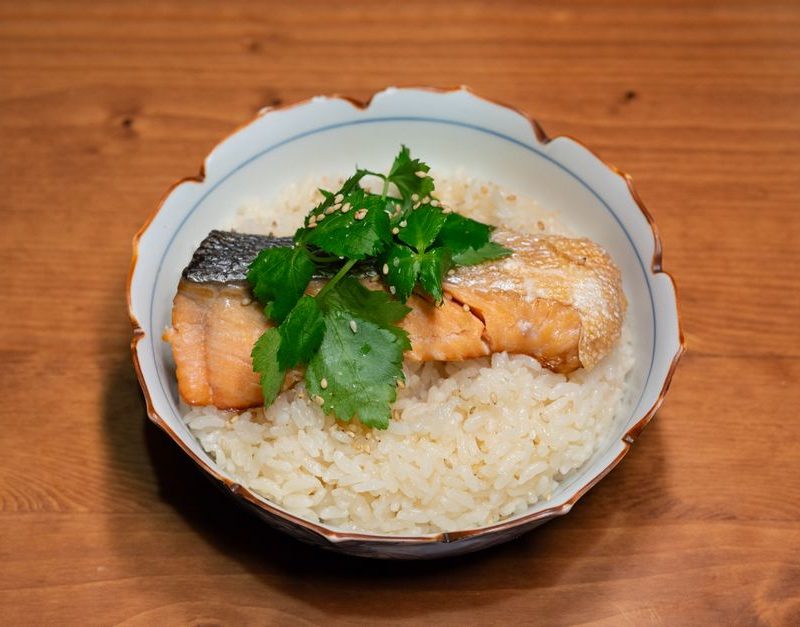
A sesame salmon rice bowl brings together warm fish, fluffy rice and crunchy vegetables, with a lime and ginger dressing that you add at the table. This version gets its sesame flavour from both toasted seeds and toasted sesame oil. Rather than coating the salmon in a sticky glaze, you roast it simply and spoon the dressing over afterwards, keeping the citrus fresh and the fish easy to cook.
The recipe serves two and works especially well as a freshly cooked dinner. Start the rice first, prepare the vegetables while it simmers, then roast the salmon towards the end. Each component has a different texture, so there is plenty of interest without a long list of toppings.
A bowl built around contrasting textures
The rice provides a soft base, the salmon breaks into generous flakes and the raw vegetables give each forkful some crunch. Toasting the sesame seeds adds another layer of flavour without needing a separate sauce for every ingredient.
Keeping the dressing separate also gives you control over the seasoning. Soy sauce brings saltiness, lime adds sharpness and a little honey rounds out the ginger. Taste it with some cooked rice before serving, as a spoonful on its own can seem stronger than it does across a whole bowl.
Ingredients
Serves two. Allow about 15 minutes for preparation and around 35 minutes overall with white basmati rice. Brown rice takes longer; follow its packet instructions and start it before preparing the other ingredients.
For the bowls
- 150g dry basmati rice, white or brown
- 2 boneless salmon fillets, approximately 130-150g each
- 1 teaspoon rapeseed oil
- Freshly ground black pepper
- Half a cucumber
- 1 medium carrot
- 2 spring onions
- 1 tablespoon sesame seeds
- A small handful of coriander leaves, optional
For the dressing
- 1 tablespoon reduced-salt soy sauce
- 1 tablespoon fresh lime juice, plus extra lime wedges to serve
- 2 teaspoons toasted sesame oil
- 1 teaspoon finely grated fresh ginger
- 1 teaspoon runny honey
- 1 tablespoon water, plus extra if needed
- A small pinch of chilli flakes, optional
You will need a saucepan with a lid, a baking tray, a small frying pan and a bowl for mixing the dressing. Check the salmon for any remaining pin bones before cooking. Keep it refrigerated according to the packaging instructions until you are ready to prepare it.
How to make sesame salmon rice bowls
- Cook the rice. Rinse it under cold running water in a sieve. Put it in a saucepan and cook according to the packet instructions, using the water quantity and timing for your particular rice. When cooked, leave it covered off the heat for a few minutes, then fluff gently with a fork.
- Prepare the salmon. Heat the oven to 200 degrees Celsius, or 180 degrees Celsius fan. Put the fillets on a baking tray, skin-side down if they have skin. Rub the rapeseed oil over the flesh and add a little black pepper. Wash your hands and clean utensils and surfaces after handling raw fish.
- Roast the fish. Cook for about 12-15 minutes, checking thin fillets earlier. The flesh should be opaque through the thickest part and separate easily into flakes. Thicker pieces may need longer, so check the centre rather than relying only on the timer.
- Prepare the vegetables. Wash the cucumber and spring onions, and scrub or peel the carrot. Slice the cucumber into thin half-moons, grate the carrot coarsely and finely slice the spring onions. Use a clean board and utensils, separate from those used for raw salmon.
- Toast the seeds. Put the sesame seeds in a dry frying pan over a medium-low heat. Stir frequently for 2-3 minutes until lightly golden and fragrant, then tip them into a dish immediately. Leaving them in the hot pan can make them darken too far.
- Stir the dressing. Mix the soy sauce, lime juice, sesame oil, ginger, honey, water and optional chilli flakes. Taste with a little cooked rice. Add water a teaspoon at a time if it tastes too strong, or a little more lime for extra sharpness.
- Assemble and serve. Divide the rice between two wide bowls. Add the cucumber, carrot and spring onions, then place a salmon fillet on each bowl. Alternatively, remove the skin and break the fish into large flakes. Spoon over half the dressing and scatter with sesame seeds and optional coriander. Offer the remaining dressing and lime wedges alongside.
Getting the texture right
Choose fillets of a similar thickness so they finish together. If one is much thinner, check it first and remove it when cooked. Leaving the salmon in large pieces during roasting makes it easier to handle and helps you judge whether the centre is ready.
For cucumber with a particularly watery centre, scoop out the soft seeds with a teaspoon before slicing. This is useful when preparing the vegetables ahead. Dry washed vegetables well so they do not leave a puddle beneath the rice or dilute the dressing.
A brief rest helps the rice settle before serving. Avoid stirring it vigorously, which can squash the grains. If your salmon finishes first, leave it on the tray briefly while you fluff the rice and arrange the vegetables.
Serving ideas and easy variations
Use wide bowls with enough space to mix a little of each component as you eat. Add dressing gradually rather than pouring it all into the rice. For extra vegetables, try finely shredded red cabbage or steamed broccoli, draining the broccoli thoroughly before adding it.
- Change the rice: short-grain rice gives a softer, more cohesive base. Follow its own packet instructions.
- Swap the crunch: use thinly sliced radishes instead of carrot, or a smaller amount of both.
- Keep it mild: omit the chilli flakes and offer spring onions separately if their raw flavour is too sharp.
- Change the citrus: replace lime juice with lemon juice, then taste before adding any extra.
Preparing ahead and storing leftovers
Prepare the vegetables and dressing ahead if useful, keeping them in separate covered containers in the fridge. Stir the dressing before serving. For the best contrast of warm and crisp ingredients, cook the rice and salmon close to mealtime.
Cool leftover rice quickly, ideally within one hour, in a clean shallow container, then cover and refrigerate. Eat within 24 hours. Cool leftover salmon promptly and refrigerate separately; use it the next day for this meal too.
Reheat only the portions you need, leaving raw vegetables and dressing aside. Heat the rice and salmon until steaming hot throughout, and reheat only once. Add the vegetables after reheating and finish with the dressing and sesame seeds just before eating.