Green pea and mint hummus toasts combine a creamy chickpea spread with sweet peas, fresh mint and crisp wholemeal bread. They make an easy lunch when you want something colourful without switching on the oven. Thinly sliced radishes and a scattering of seeds add crunch, while lemon keeps the topping bright and fresh.
This recipe is built around the finished toast rather than a bowl of dip. The hummus stays thick enough to sit comfortably on the bread, and the toppings provide a contrast to its soft texture. Frozen peas are convenient here, and you can prepare the spread ahead, leaving only the toasting and assembly until lunchtime.
Ingredients and preparation
Serves two for lunch, making four generous toasts. Allow about 20 minutes, including cooking and cooling the peas. You will need a saucepan, sieve, food processor and toaster or grill.
For the pea and mint hummus
- 150g frozen peas
- 1 x 400g tin chickpeas, drained and rinsed, giving approximately 240g drained weight
- 2 tablespoons tahini, stirred before measuring
- 1 tablespoon extra virgin olive oil
- 2 tablespoons lemon juice, plus extra to taste
- 1 small garlic clove, peeled and roughly chopped
- 2 tablespoons roughly chopped fresh mint leaves, loosely packed
- 2–4 tablespoons cold water, as needed
- A small pinch of salt and freshly ground black pepper, to taste
For the toasts
- 4 medium, sturdy slices wholemeal bread
- 4 radishes, washed and thinly sliced
- 1 tablespoon pumpkin seeds
- A few small mint leaves
- Lemon wedges, to serve
Choose bread with enough structure to support a generous topping. A wholemeal loaf with a fairly close crumb works well; very airy bread can let the spread fall through its holes. Slice it evenly so the edges do not scorch before the centre becomes crisp.
How to make the toasts
- Cook the peas. Bring a small pan of water to the boil. Add the frozen peas and cook according to the packet instructions until tender. Drain, rinse briefly under cold running water to cool, then leave in the sieve to drain thoroughly. Shake off excess water before blending.
- Blend the base. Put the chickpeas, tahini, olive oil, lemon juice and garlic into a food processor with 2 tablespoons cold water. Blend, stop to scrape down the sides, then blend again until the mixture starts to become creamy.
- Add peas and mint. Tip in the cooled peas and chopped mint. Process until combined, leaving a little texture if you like. For a smoother spread, scrape down the bowl and continue blending until no large pieces remain.
- Adjust and season. Add more water a teaspoon at a time if necessary. The mixture should spread easily but hold a soft mound on a spoon. Taste and add black pepper, a small pinch of salt and extra lemon juice as needed.
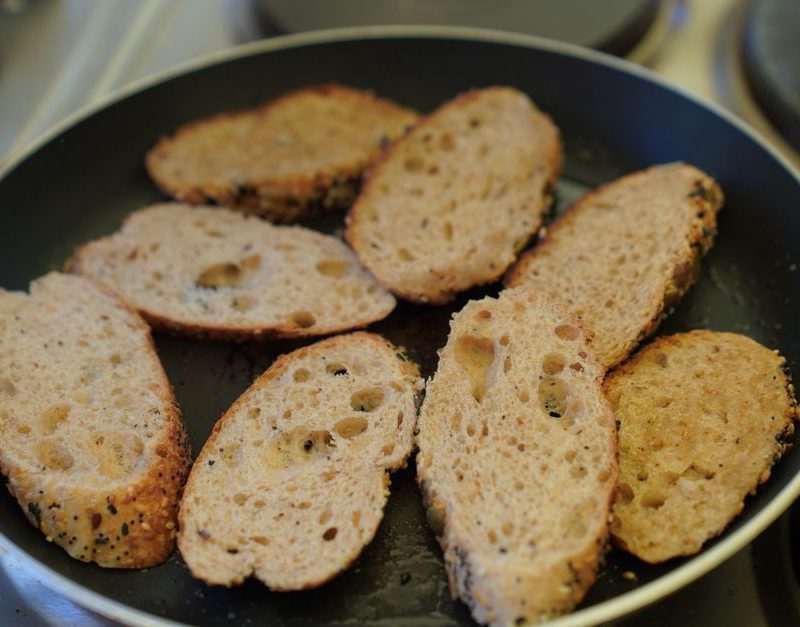
- Toast the bread. Toast until crisp on the surface and lightly golden at the edges. If using a grill, turn the slices to toast both sides. Rest on a rack for a minute so steam can escape rather than softening the underside.
- Assemble. Divide the hummus between the four slices and spread almost to the edges. Add sliced radishes, pumpkin seeds and small mint leaves. Finish with black pepper and serve straight away with lemon wedges.
A thick spread makes better toast
The most useful step is draining the peas well. Water caught between them can turn a firm spread into a loose dip, particularly once you add lemon juice. Start with the measured liquid, then give the processor time to work before adding more.
If your processor struggles, stop and scrape the mixture towards the blade. Smaller machines sometimes need several pauses. There is no need to remove every chickpea skin: a little texture works nicely against crunchy bread. Blending the chickpeas before adding the peas helps create a creamy base without overworking the herbs.
Without a processor, mash the peas and chickpeas thoroughly with a potato masher. Finely chop the mint, grate the garlic and beat everything together with a fork. This version will be chunkier. Spread it slightly more thinly and press it gently into the bread so it stays in place.
Balancing the flavours
Peas bring sweetness, tahini adds a savoury note and mint gives a fresh finish. Lemon draws those flavours together. If the mixture tastes a little flat, try another small squeeze of lemon before adding more salt. Taste with a piece of the bread, too, because the finished combination can taste different from the spread alone.
Use mint leaves rather than thick stalks, which can feel fibrous. Begin with the amount listed and increase it only after tasting. If you prefer gentle garlic flavour, start with half the clove. You can blend in more, but its flavour may become more noticeable as the hummus stands.
Simple variations
- Without tahini: omit it and add another tablespoon of olive oil. Start with less water, then adjust gradually. The result will taste more strongly of peas and mint. If avoiding sesame because of an allergy, check all your other ingredients as well.
- With cucumber: replace the radishes with thin cucumber slices. Pat them dry first so they do not introduce extra moisture to the toast.
- With gentle heat: scatter a small pinch of chilli flakes over individual slices. Adding them at the end lets everyone choose the amount they enjoy.
- With fresh peas: use the same weight of podded peas, cooking until tender before cooling and draining. Their sweetness varies, so taste the finished spread before adjusting the lemon.
Serving and keeping leftovers
Serve two toasts per person with leafy salad or sliced peppers for lunch. For a smaller snack, make one toast and keep the remaining spread chilled. If you are serving several people, cut large slices in half before adding the toppings so they are easier to pick up.
Transfer leftover hummus to a covered container, refrigerate promptly and use within two days. Keep bread, radishes and seeds separate, then assemble only when ready to eat. Chilled hummus can firm up: stir it and add a teaspoon of cold water if needed, then taste again for lemon.
For a packed lunch, carry the hummus in a chilled container with the vegetables separately and spread it onto your bread when you eat. Any remaining hummus also makes a useful dip for carrot sticks or a filling for a pitta with shredded lettuce. The same mixture gives you another lunch without requiring another cooking session.