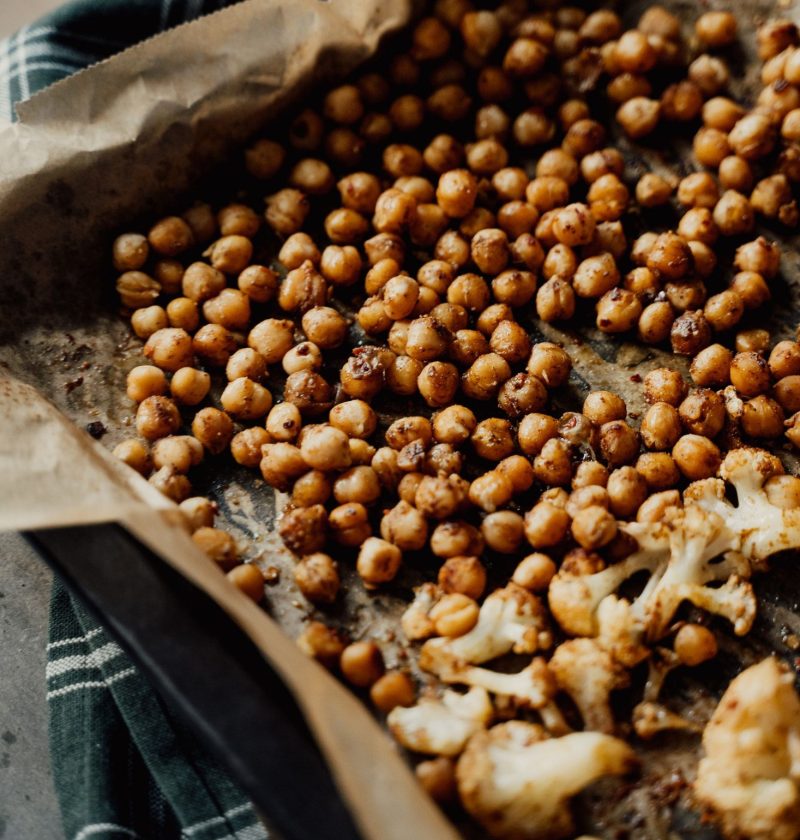
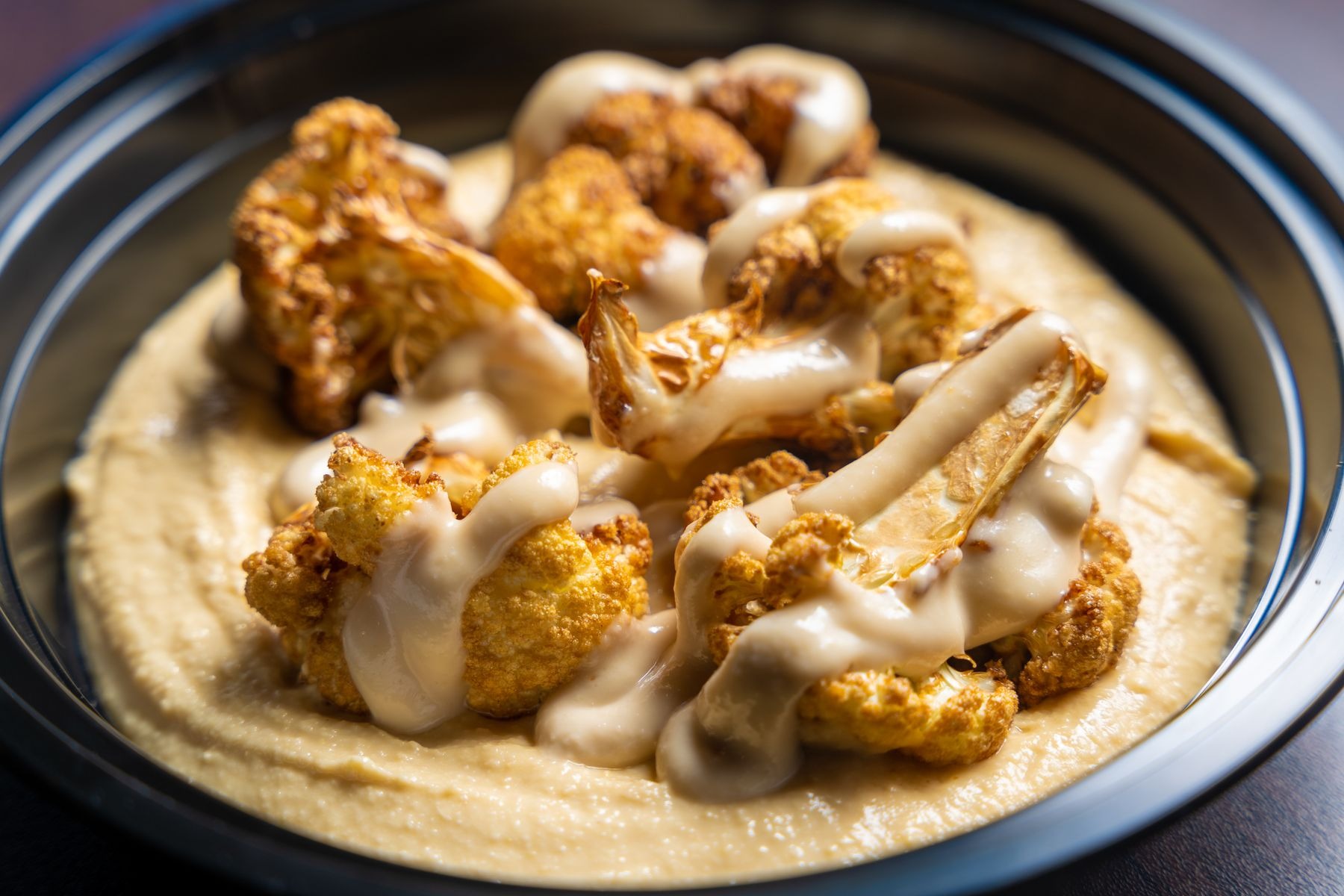
Roasted cauliflower and chickpeas bring two different textures to the same bowl: cauliflower develops browned edges and tender centers, while chickpeas become firmer and lightly crisp outside. Lemon tahini sauce links them together without requiring a long ingredient list. A little cucumber added after roasting provides a cool contrast to the warm vegetables.
Space on the baking sheet is essential. A crowded tray traps steam and leaves cauliflower pale, even after a long oven stay. This recipe uses two trays so the chickpeas and cauliflower can spread out and finish at their own pace. The bowls can be served over cooked grain, but the roasted components remain the focus.
Servings, Timing, and Equipment
Makes 4 servings. Allow 20 minutes for preparation and 30 to 35 minutes for roasting, about 55 minutes total. Use two rimmed baking sheets, clean towels, a large bowl, and a small whisk. The timing assumes optional cooked quinoa or rice is ready; if cooking grain from dry, follow its package directions and begin it while the oven heats.
Ingredients
- 1 large cauliflower, about 2 pounds before trimming
- 2 cans chickpeas, 15 ounces each, drained and rinsed
- 3 tablespoons olive oil, divided
- 1 teaspoon ground cumin
- 1 teaspoon smoked paprika
- 3/4 teaspoon fine salt, divided
- 1/4 teaspoon black pepper
- 1/3 cup tahini, stirred well
- 3 tablespoons fresh lemon juice
- 1 small garlic clove, finely grated
- 1/4 cup cool water, plus more as needed
- 1 medium cucumber, diced
- 1/4 cup chopped parsley
- 2 cups cooked quinoa or brown rice for serving, optional
Dry the Chickpeas and Size the Florets
After rinsing chickpeas, spread them across a towel and blot thoroughly. Loose skins can be removed if they come away easily, but there is no need to peel every chickpea. Surface moisture delays browning. The goal here is a lightly crisp coating with a tender middle, not a completely dry snack chickpea.
Cut cauliflower into florets around 1 1/2 inches wide, with flat sides where possible. Those surfaces make good contact with the hot tray. Slice the tender core into 1/2-inch pieces rather than discarding it. Very tiny florets can burn before thick stems soften, so group pieces of similar size together.
Numbered Roasting and Assembly Steps
- Heat the oven to 425 F with racks in the upper and lower thirds. Line trays with parchment if desired, leaving the paper fully inside the rim.
- Toss cauliflower with 2 tablespoons oil, 1/2 teaspoon salt, cumin, and black pepper. Spread over one tray, placing flat sides down and leaving gaps between pieces.
- Toss chickpeas with the remaining tablespoon oil, smoked paprika, and remaining 1/4 teaspoon salt. Spread across the second tray in a single layer.
- Roast both trays for 15 minutes. Turn cauliflower, stir chickpeas, and exchange the trays between racks. Continue for another 15 to 20 minutes, checking the chickpeas a little earlier if they brown quickly.
- Meanwhile, whisk tahini, lemon juice, and garlic. Add 1/4 cup water gradually, whisking through the initial thickening until the sauce turns smooth. Add more water a tablespoon at a time until it drizzles easily.
- Divide optional grain among bowls, then add roasted cauliflower, chickpeas, and cucumber. Spoon sauce over each bowl and scatter with parsley. Serve extra sauce separately.
Doneness and Browning Checks
Cauliflower is ready when its edges are browned and a knife slides into the thickest stem with little resistance. Chickpeas should be hot inside and lightly crisp outside, but may soften somewhat as they cool or touch the sauce. Oven timing is an estimate: remove one tray first if that component is ready before the other.
If cauliflower is tender but pale, move its tray to the upper rack for a few minutes, watching closely. If browned but still firm, cover loosely with foil and continue baking. For tahini sauce that seems bitter, make sure the paste was thoroughly stirred before measuring. Lemon and water balance the sesame flavor, but cannot fix rancid tahini.
Substitutions and Serving Ideas
Replace half the cauliflower with 1 pound broccoli, checking it earlier because small florets can cook quickly. White beans can replace chickpeas, though they are more delicate and will not become as crisp. For a sesame-free sauce, whisk 1/2 cup plain yogurt with lemon, garlic, and 1 tablespoon water instead of tahini; choose plant yogurt if needed.
Add shredded red cabbage instead of cucumber for a bowl that holds its crunch longer. Cooked couscous is another optional base, but it changes the grain preparation and contains wheat. Keep toppings restrained so the lemon-tahini flavor remains clear rather than disappearing under several dressings.
Storage and Reheating
Store roasted components, sauce, cucumber, and any grain separately. Refrigerate promptly in shallow containers at 40 F or below, within 2 hours, or 1 hour above 90 F. Use within 3 to 4 days. Reheat cauliflower and chickpeas on a tray until hot throughout and 165 F, then add cold toppings. The chickpeas may not regain their original crispness. Freeze only roasted components, up to 2 months for quality. See USDA leftover guidance.