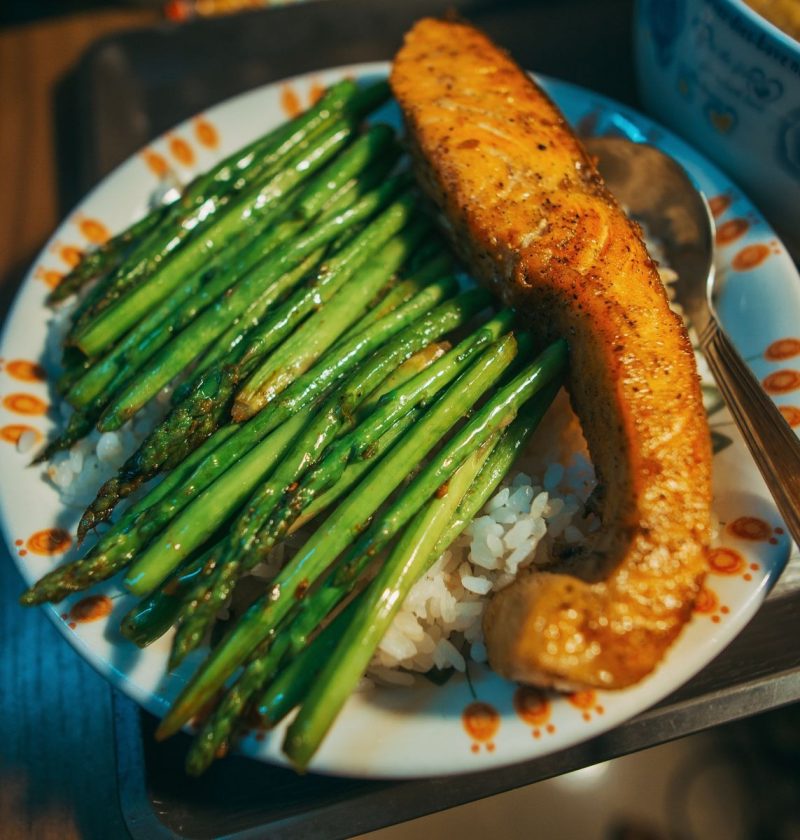
Sheet-pan salmon and asparagus is a compact dinner with little stovetop work. A thin lemon-mustard coating seasons the fish, while olive oil helps the asparagus roast instead of drying out. The challenge is not making a complicated sauce; it is matching vegetable thickness to the fish and removing each component when it is ready.
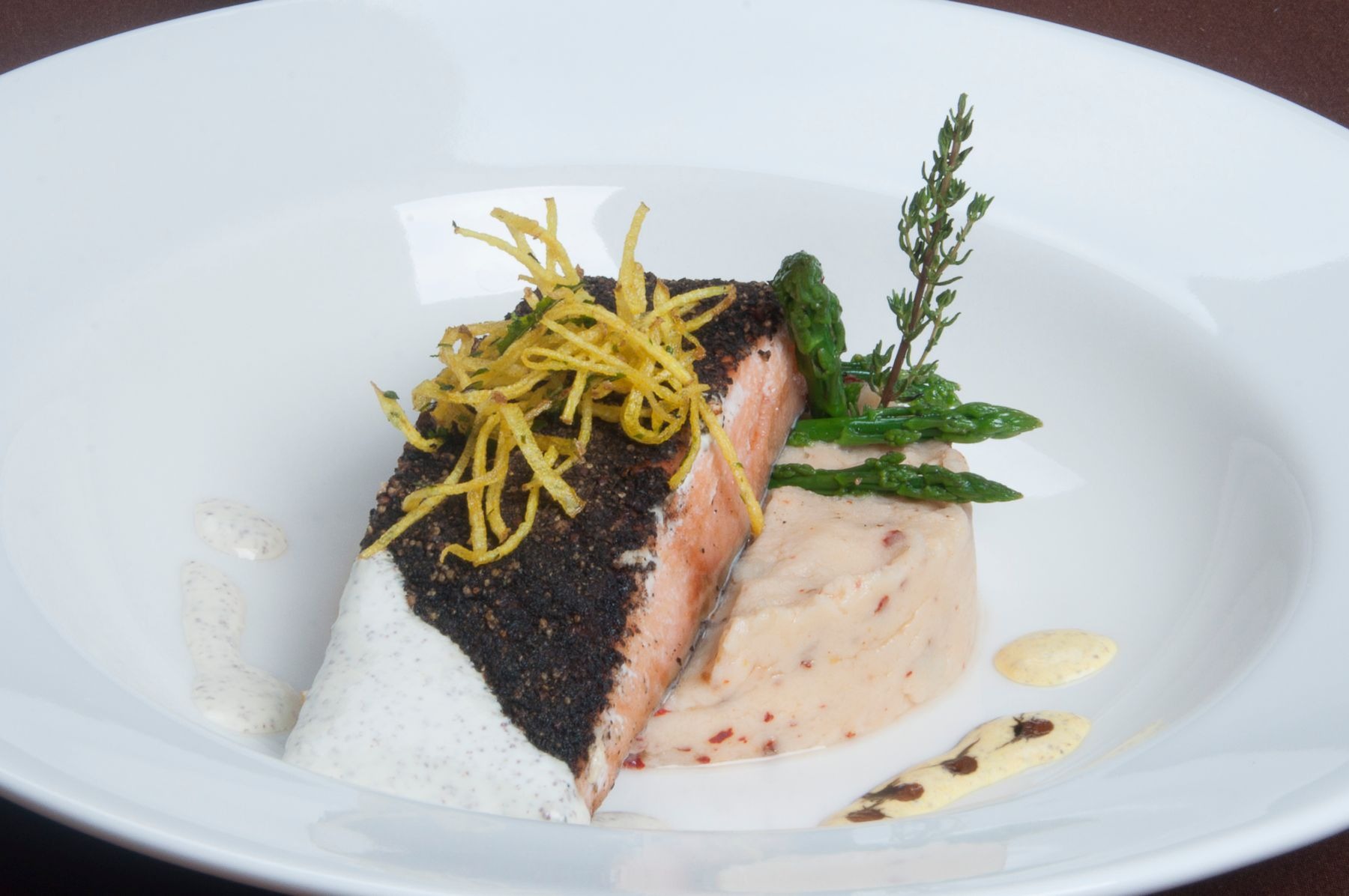
This recipe uses medium asparagus spears and salmon portions roughly 1 inch thick. Very thin asparagus should be added later, while unusually thick spears benefit from a head start. Salmon cooking time varies by portion size and starting temperature, so the thermometer, not the glaze color, is the final safety check.
Servings, Timing, and Equipment
Makes 4 servings. Allow 15 minutes for preparation and approximately 12 to 18 minutes for roasting, about 35 minutes total with oven heating. Use a large rimmed baking sheet, parchment or lightly oiled foil, a small bowl, and an instant-read thermometer. If serving with rice, potatoes, or bread, prepare that separately; those additions are not included in the stated cooking time.
Ingredients
- 4 salmon portions, 5 to 6 ounces each and about 1 inch thick
- 1 pound asparagus, woody ends trimmed
- 2 tablespoons olive oil, divided
- 1 tablespoon Dijon mustard
- 1 tablespoon fresh lemon juice
- 1 teaspoon finely grated lemon zest
- 1 teaspoon maple syrup
- 1 small garlic clove, finely grated
- 1/2 teaspoon fine salt, divided
- 1/4 teaspoon black pepper, divided
- 1 tablespoon chopped dill or parsley
- 1 lemon, cut into wedges for serving, optional
- 2 cups cooked rice for serving, optional
Prepare the Tray and Ingredients
Heat the oven before taking the fish out of the refrigerator. If using frozen salmon, thaw it in the refrigerator according to package directions; some vacuum-packed fish must be removed from its packaging before thawing. Keep raw fish separate from ready-to-eat ingredients and use clean utensils for the final herb garnish.
Pat salmon dry and check for pin bones. Trim asparagus where the woody section ends, using a knife to remove a similar amount from the bunch, then inspect individual thick spears. Peel a tough lower stem if needed. Dry asparagus after washing so it roasts efficiently. A tray with a raised rim helps contain juices and oil.
Numbered Roasting Steps
- Heat the oven to 425 F. Line the rimmed tray with parchment or lightly oiled foil. Arrange salmon on one side, skin-side down if it has skin, leaving room between portions.
- In a bowl, whisk 1 tablespoon olive oil, mustard, lemon juice, lemon zest, maple syrup, garlic, 1/4 teaspoon salt, and half the black pepper.
- Spoon the mixture evenly over the salmon. Do not return a brush or spoon that has touched raw fish to any sauce intended for serving; this recipe uses all the glaze on the fish.
- Toss asparagus with the remaining tablespoon olive oil, remaining salt, and remaining pepper. Spread beside the fish in a single layer, not underneath it.
- Roast for approximately 12 to 18 minutes. Begin checking salmon at 10 to 12 minutes, especially if portions are thinner than 1 inch. Insert a thermometer into the thickest center from the side and remove each portion when it reaches 145 F.
- Check asparagus separately. Remove it when tender and lightly browned, or give it a few more minutes after transferring cooked fish to clean plates. Scatter herbs over the finished food and serve with optional lemon wedges and rice.
Doneness and Timing Differences
The FDA seafood guidance recommends cooking fish to 145 F. An opaque surface or white protein on the salmon is not a substitute for measuring the thickest part. Check each portion if sizes differ, and do not plan to remove fish below the target while assuming resting will always make up the difference.
Asparagus should bend slightly and yield to a fork while retaining its shape. Pencil-thin spears may need only 6 to 8 minutes, so add them after the salmon has roasted for several minutes. Extra-thick spears can start 5 minutes before the fish. These adjustments are more useful than forcing all sizes into one fixed oven window.
Substitutions and Serving Ideas
Broccoli florets can replace asparagus, but give them a 10-minute head start and check stem tenderness. Green beans also work with a brief head start depending on thickness. Replace Dijon with whole-grain mustard for a more textured coating. Omit maple syrup if preferred; the glaze will be sharper and may brown a little less.
Serve with cooked rice, boiled potatoes, or a simple leafy salad. For a dairy-free sauce, no change is needed because the glaze contains no dairy ingredients. If mustard is unsuitable, replace it with 1 additional teaspoon olive oil and a pinch of dried dill, accepting a thinner coating rather than trying to imitate the same glaze.
Storage and Reheating
Refrigerate leftovers promptly in shallow containers at 40 F or below, within 2 hours, or 1 hour above 90 F. Use within 3 days. Reheat covered and gently until the center reaches 165 F; salmon will be firmer than when freshly cooked. Freeze salmon for up to 2 months for quality, but asparagus softens considerably after freezing. Keep any rice under the same prompt-cooling rules. See USDA leftover guidance.