A calmer evening does not require a perfectly tidy home or an elaborate wellbeing routine. It often begins with a clearer boundary between the busy part of your day and the time that belongs to you. When work, dinner, messages and household jobs run together, it is easy to reach the end of the evening without feeling you have had a pause.
Focus on making those transitions easier. An achievable meal, a stopping point for chores and something enjoyable to look forward to can give the evening a gentler shape. This approach is about reducing everyday friction, rather than turning your free time into another improvement project.
Mark the end of your main responsibilities
Choose one small action that signals a change of pace. Close your laptop and put it away, hang up your work bag or change into comfortable clothes. If you work from home, clearing work materials from the place where you eat can make the boundary more visible.
Before finishing, write down the next action for anything unfinished. A specific reminder, such as checking an appointment time tomorrow, gives you something to return to. Keep it where you will see it when you next need it, rather than leaving several reminders scattered around your evening space.
You may still feel busy or distracted afterwards. The action is simply a marker. If caring responsibilities begin as soon as paid work ends, your pause might be washing your hands, getting changed and taking a moment before starting the next task.
Match dinner to the evening you have
Decide how much attention you can give cooking before deciding what to eat. On a demanding day, a familiar meal with little preparation may suit you better than a recipe with several stages. There is room for both straightforward food and more involved cooking across a normal week.
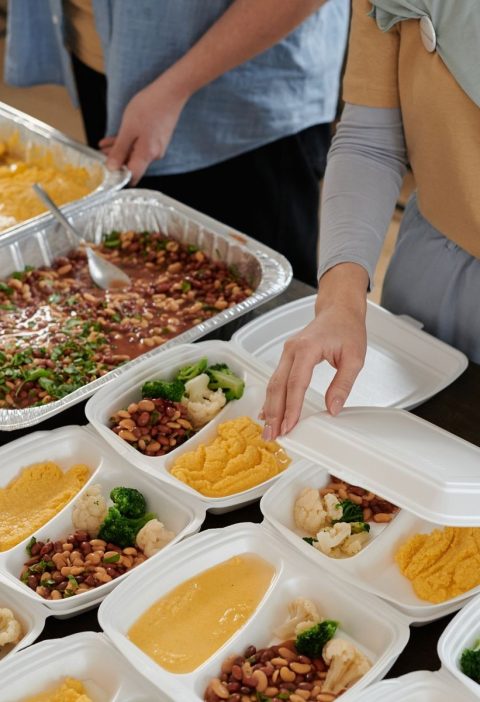
Bring together a starchy food, a source of protein and some vegetables or fruit in a form you enjoy. Toast with scrambled eggs and tomatoes, a jacket potato with beans and salad, or noodles with tofu and frozen vegetables are all practical starting points. Adapt them to your appetite and what is available.
Have a familiar fallback
Choose one meal you can usually make from ingredients already in your kitchen. Its purpose is to remove a decision when plans change. It does not need to be your most impressive dinner, and repeating it during a busy spell is perfectly reasonable.
If you share the kitchen, make help specific. One person could cook while another clears a place to eat or washes up. Agreeing on a small job is easier than expecting everyone to notice the same things at the same time.
Give your meal some space
You do not need a dining room to make eating feel like a pause. Clear a corner of a table, move paperwork off a tray or find somewhere comfortable where your plate is supported. Even a modest change can distinguish dinner from the tasks surrounding it.
Consider leaving messages alone for part of the meal, especially if checking them regularly brings more demands into view. If you enjoy the radio or a programme while eating, choose it deliberately. Notice whether it makes the meal pleasant or simply adds another source of noise.
For shared meals, leave room for conversation that is not about organising the household. Urgent arrangements may need attention, but dinner does not have to carry every discussion about tomorrow.
Decide what counts as finished
Household work rarely offers a natural endpoint. There is usually another cupboard to organise or surface to wipe. Give essential evening jobs a clear boundary so they do not expand to fill all the time available.
- Put away food that needs chilling promptly and follow its storage instructions.
- Clear enough kitchen space to prepare the next meal comfortably.
- Deal with anything that would cause an immediate problem if left.
- Set aside larger cleaning and organising tasks for a planned time.
Use concrete descriptions. Clearing the sink has an obvious finish; sorting out the whole kitchen may not. Once the essentials are done, allow yourself to stop even if the room still looks lived in.
Prepare for one morning difficulty
A little preparation can help when it solves a problem you regularly encounter. Put your keys in their usual place, set out your bag or check whether you need an umbrella. Choose the action that makes your own morning easier, rather than copying a long preparation checklist.
Then close the planning stage. If another task occurs to you, record a brief reminder instead of immediately opening your email or starting a search. Remembering something does not always mean it needs doing tonight.
Leave room for something you enjoy
Choose an activity without a result to measure. Read a few pages, listen to music, knit, sit outside or have a conversation. You do not need to finish a chapter, learn something useful or make progress on a hobby for the time to count.
If you would welcome a change after sitting for much of the day, try a short walk or some comfortable stretches. Let movement fit the evening rather than making it another target. Equally, choosing to sit quietly can be a reasonable response to a physically demanding day.
Consider your digital habits practically. If browsing is enjoyable, there may be nothing to adjust. If it repeatedly takes time you wanted for something else, choose what you will watch or check before opening an app, and give that activity a recognisable stopping point.
Keep a shorter version for difficult days
Children, visitors, late work and unexpected errands can change the evening completely. On those days, a useful routine might consist of putting work away, eating something manageable and completing essential kitchen jobs. A brief chat may be the only leisure activity that fits.
Start with one change that addresses your biggest source of friction. Try it on several ordinary evenings and notice whether it helps. If it creates more effort than it saves, make it smaller. Your routine should serve the people living with it.
If persistent distress or a health condition makes evenings difficult, speak to your GP. A registered dietitian can help with eating concerns that need individual advice. For everyday evenings, begin with one clear stopping point and a little space to choose what comes next.