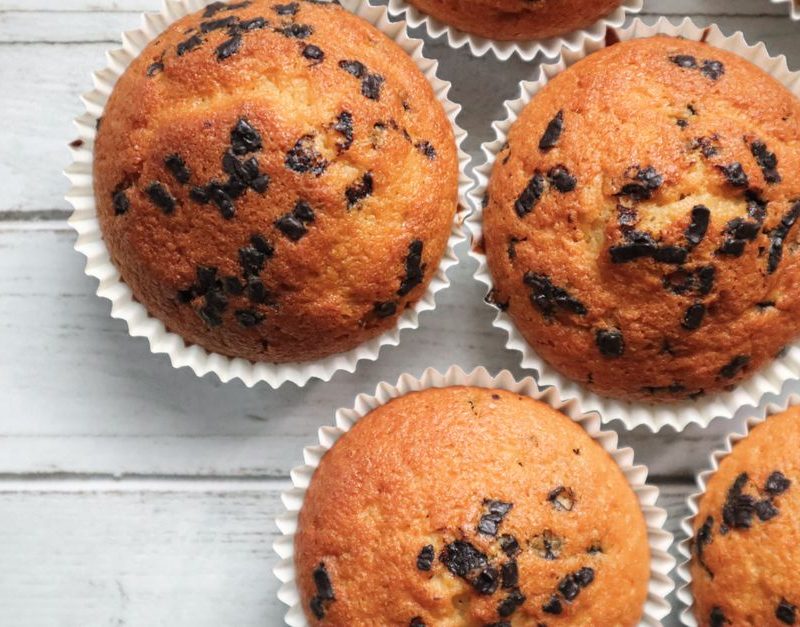
Wholemeal banana and walnut muffins bring together soft, ripe banana, a gently nutty crumb and pieces of walnut that give each mouthful a little crunch. This recipe focuses on getting that balance right: enough fruit to keep the muffins moist, enough flour to support them, and a light hand when mixing. They are straightforward to make with bowls and a fork, and they work equally well freshly cooled or tucked into the freezer for another day.
The result is a modestly sweet muffin with a rounded banana flavour, rather than a heavily frosted cake. Wholemeal flour adds character, but it still needs careful handling to produce a tender bake. Weighing the mashed banana and stopping as soon as the batter comes together make a useful difference.
What to expect from this recipe
This batch makes 12 standard muffins. Allow about 15 minutes to prepare them, 20–24 minutes for baking and a little extra time for cooling. You will need a standard 12-hole muffin tin, paper cases, two mixing bowls, a fork, a spatula and kitchen scales.
Choose bananas with plenty of brown speckles and soft flesh. They should smell pleasantly sweet, with no mould or fermented smell. Firm, barely ripe bananas are harder to mash and leave the muffins less fragrant. If you have frozen ripe bananas, thaw them in the fridge, then mash and weigh the flesh together with any liquid they release.
Ingredients
- 250 g wholemeal plain flour
- 2 teaspoons baking powder
- ½ teaspoon bicarbonate of soda
- 1 teaspoon ground cinnamon
- A small pinch of salt
- 300 g peeled ripe banana, roughly 3 medium bananas
- 2 medium eggs
- 75 g light brown soft sugar
- 75 ml rapeseed oil, plus a little for greasing if needed
- 100 g plain natural yoghurt
- 1 teaspoon vanilla extract
- 75 g walnut halves, roughly chopped
Before you start: use plain wholemeal flour, rather than self-raising flour, because the raising agents are measured separately here. Stir the yoghurt before weighing it if liquid has separated on top. Chop the walnuts into small, uneven pieces rather than leaving large halves, which can make the muffins awkward to break apart.
How to make wholemeal banana and walnut muffins
- Prepare the oven and tin. Heat the oven to 180°C, or 160°C fan. Place a shelf near the centre and line the muffin tin with 12 paper cases. If your cases tend to stick, brush their insides very lightly with oil.
- Combine the dry ingredients. Put the flour, baking powder, bicarbonate of soda, cinnamon and salt into a large bowl. Stir thoroughly so the raising agents are evenly distributed. Break up any visible lumps, but keep all the bran in the mixture.
- Mash the banana. In the second bowl, mash the weighed banana with a fork until mostly smooth. A few small lumps are fine; large chunks can leave wet pockets in the finished muffins.
- Mix the wet ingredients. Add the eggs, sugar, oil, yoghurt and vanilla to the banana. Beat with the fork or a whisk until the eggs are fully incorporated and the mixture looks evenly combined.
- Fold the batter together. Pour the banana mixture into the flour mixture. Use a spatula to fold from the bottom of the bowl, turning the bowl as you go. When only a few flour streaks remain, add the chopped walnuts and fold just until no dry patches are visible. The batter should be thick and spoonable.
- Fill the cases. Divide the batter evenly between the 12 cases, filling each roughly three-quarters full. Scrape out the bowl with the spatula and gently level any tall peaks. Put the tin straight into the heated oven.
- Bake until set. Bake for 20–24 minutes, checking towards the end. The tops should feel gently springy, and a skewer inserted into the centre of a muffin should come out without raw batter. A little banana moisture or a few soft crumbs are fine; a sticky coating of batter means they need longer.
- Cool carefully. Leave the muffins in the tin for 5 minutes, then transfer them to a wire rack. Allow them to cool further before peeling away the cases, as the crumb is delicate while hot.
Small details that help the texture
Measure the banana after peeling
Bananas vary considerably in size. Using three without weighing them can add much more or less fruit than intended. Too much banana makes it harder for the centre to set, while too little gives a drier muffin. The weight is the more reliable guide.
Keep the mixing brief
A smooth-looking muffin batter is not the goal. Once liquid meets flour, repeated stirring can make the finished crumb tough. Fold slowly and check the bottom of the bowl for hidden flour. Stop when everything is incorporated, even if the batter still looks slightly lumpy.
Check the bake, rather than the colour alone
Wholemeal flour and brown sugar give these muffins a deeper colour from the start. A brown top does not necessarily mean the middle is cooked. Test a muffin near the centre of the tin, and give the batch another couple of minutes if needed.
Serving ideas
Enjoy a muffin slightly warm, when the walnuts are especially fragrant, or let it cool completely for a firmer crumb. For breakfast, serve one alongside plain yoghurt and fresh fruit. The muffin supplies the baked element, while the accompaniments add different textures and make the meal more varied.
They also suit an afternoon cup of tea. There is no need for icing, though a little butter or nut butter can be pleasant on a split muffin. Choose accompaniments according to your appetite rather than treating the muffins as a fixed portion that must suit everyone.
Simple variations
- Orange and walnut: add the finely grated zest of one washed orange to the wet ingredients. Keep the juice for another use so the batter stays balanced.
- Pecan instead of walnut: replace the walnuts with the same weight of chopped pecans for a slightly different flavour and crunch.
- Mixed spice: replace the cinnamon with the same quantity of mixed spice for a warmer, more rounded spice flavour.
- Without nuts: omit the walnuts. The muffins will lose their crunchy contrast but still bake well. If preparing them for someone with an allergy, check every ingredient and avoid cross-contact from equipment.
Keeping and freezing
Let the muffins cool completely before putting them into an airtight container; trapped steam can make the tops sticky. Keep them in a cool place and eat within two days. In a warm kitchen, refrigerate them and allow a little time at room temperature before serving. Discard any muffins showing mould.
For longer storage, freeze the cooled muffins in a sealed freezer bag or container for up to three months. Separate them with baking parchment if necessary. Thaw individual muffins covered at room temperature and eat the same day. To refresh one, warm it briefly in a low oven, checking that the centre has warmed through before serving.