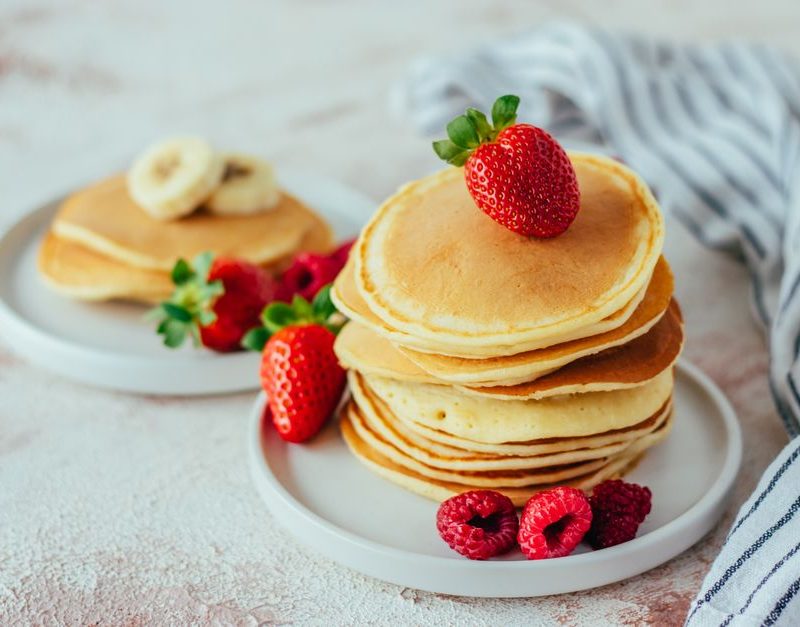
Shrove Tuesday is a good excuse to put a warm pan on the hob and make pancakes the centre of a relaxed meal. A healthier pancake evening can still include the fillings you look forward to. Offer variety, with vegetables, fruit and satisfying savoury options alongside sweet favourites. Start with one simple mixture that works for both courses and let everyone choose how to fill it.
Build the evening around one versatile batter
Thin pancakes work particularly well for a shared supper because you can roll or fold them around different fillings. Keep the batter unsweetened so the same batch can hold mushrooms and spinach, soft pears or a squeeze of lemon. You do not need a separate recipe for every person at the table.
A mixture of plain and wholemeal flour gives a slightly nuttier flavour while keeping the pancakes easy to spread. Wholemeal flour also brings fibre to the mixture. If your household prefers traditional plain pancakes, use all plain flour and bring variety through the fillings instead. A meal does not have to tick every possible box to be enjoyable.
Simple sweet and savoury pancake batter
This makes approximately eight thin pancakes in a 20 cm frying pan, enough for about four people with generous fillings and accompaniments. Appetite and pancake size will affect how far the batch stretches.
- 75 g plain flour
- 50 g wholemeal flour
- 2 medium eggs
- 300 ml semi-skimmed milk
- 1 teaspoon rapeseed or sunflower oil, plus a little extra for cooking
- 1 to 3 tablespoons water, if needed after resting
- Put both flours in a mixing bowl and make a well in the centre. Crack in the eggs and add a splash of milk.
- Whisk from the centre, gradually drawing in the flour. Add the remaining milk in stages until the batter is smooth and pourable. Stir in the teaspoon of oil.
- Rest for about 20 minutes while you prepare the fillings. Whisk again, adding water a tablespoon at a time if the mixture seems too thick to swirl around the pan.
- Heat a non-stick frying pan over a medium heat. Add a few drops of oil and spread over the base with a heatproof brush.
- Pour in enough batter to coat the base thinly, tilting the pan immediately. Cook for about 1 to 2 minutes, until the surface looks set and the edges lift easily.
- Loosen with a spatula, turn carefully and cook for another 30 to 60 seconds, until lightly golden and cooked through. Reduce the heat if the pancake browns before the surface sets.
- Transfer to a plate and repeat, stirring the batter between pancakes and lightly oiling the pan when necessary. Serve promptly, or cover the stack loosely while you finish cooking.
Offer a savoury filling first
A savoury option turns pancakes into supper and gives everyone something substantial before the sweet toppings appear. Combine vegetables with beans, eggs or cheese. Keep the filling fairly dry: excess liquid can soak through a thin pancake and make it difficult to lift.
Mushrooms, spinach and white beans
For enough filling for four pancakes, slice 250 g mushrooms and cook them in 2 teaspoons olive oil in a large frying pan over a medium-high heat. Stir occasionally until softened and any released liquid has mostly evaporated. Add one finely chopped garlic clove and cook briefly, then stir in 100 g spinach until wilted.
Add one drained and rinsed 400 g tin of cannellini beans. Warm everything through, gently crushing a few beans to help the filling hold together. Season with black pepper and a squeeze of lemon. Divide between four pancakes and fold the sides over. Offer a little grated mature Cheddar separately for anyone who would like it.
A bowl of sliced tomatoes or grated carrot makes an easy accompaniment. Prepare it before cooking the pancakes so the last-minute work stays focused on the hob. For a variation, replace the mushrooms with a thinly sliced pepper, cooking it until tender before adding the spinach.
Choose sweet toppings with different textures
Fruit is a useful starting point because it brings flavour, juiciness and colour. Pair it with something creamy or crunchy, and choose a couple of combinations rather than filling the table with bowls. Fresh, frozen and gently cooked fruit can all work; drain any excess juice before filling the pancakes.
Warm pear with cinnamon yoghurt
Core and thinly slice two ripe pears. Put them in a small saucepan with 2 tablespoons water and a pinch of cinnamon. Cover and cook gently for 5 to 8 minutes, stirring occasionally, until tender. Uncover briefly if there is excess liquid. Spoon into pancakes with plain yoghurt and, if suitable for everyone eating, a scattering of chopped walnuts.
Orange, yoghurt and toasted seeds
Peel two oranges, remove any pips and cut the flesh into small pieces. Serve with plain yoghurt and 2 tablespoons pumpkin or sunflower seeds, lightly toasted in a dry pan and allowed to cool. Assemble just before eating so the pancakes stay tender without becoming soggy.
Lemon and sugar can stay on the table too. Put sugar in a small bowl with a teaspoon so everyone can add the amount they enjoy. You can offer familiar favourites alongside fruit without turning the occasion into a discussion about which toppings people should choose.
Make the cooking comfortable for everyone
Prepare fillings before heating the pancake pan, and keep raw batter away from ready-to-eat toppings. Wash hands and utensils after handling eggs, and avoid tasting uncooked batter. Children can help mix cooled toppings or fold cooked pancakes at a safe distance from the hot hob.
Check dietary needs before choosing ingredients. This batter contains wheat, eggs and milk. An unsweetened, calcium-fortified soya drink can replace the milk if suitable, although browning may differ slightly. Replacing eggs or wheat needs a recipe designed for that change; a direct swap will not always produce a flexible pancake. Keep optional nuts in a separate bowl and use separate serving spoons.
Save spare pancakes for another meal
If preparing ahead, refrigerate the covered raw batter and use within 24 hours. Stir well before cooking. Cool leftover cooked pancakes promptly, cover and refrigerate within two hours, then eat within two days. Keep fillings separately so you can reheat only what you need.
Freeze plain cooked pancakes with baking parchment between them in a sealed container. Defrost in the fridge and reheat until steaming hot throughout, either in a frying pan or covered in the microwave. Reheat leftovers only once. Spare pancakes can become lunch with roasted vegetables and beans, or a quick pudding with stewed fruit, giving the batch a useful life beyond the celebration.