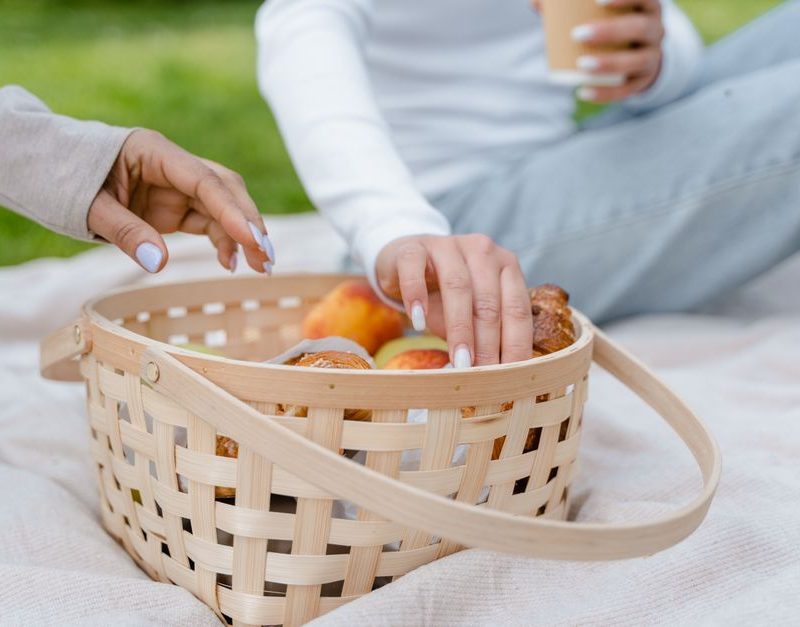
A good picnic should still taste inviting when you unfold the blanket: bread with some bite, vegetables that crunch and fruit that has survived the journey. The easiest way to achieve that is to plan around texture and assembly. Choose a few foods that travel well, keep moist ingredients separate and put the finishing touches together when you sit down.
You do not need an elaborate spread to eat well outdoors. A satisfying main, some vegetables, fruit and something you enjoy sharing can be plenty. Build a picnic that arrives in good condition, with enough flexibility for different appetites and a change in the weather.
Build a small menu with different textures
Start with one main food rather than several competing dishes. Wholemeal rolls with a filling, a sturdy vegetable tart or a container of dressed lentils can anchor the meal. Add something crisp and something juicy so the spread feels varied without requiring lots of preparation.
For balance, include a starchy food, a source of protein and vegetables or fruit across the meal. Wholegrain bread, beans, eggs, tofu, fish or chicken can all have a place, depending on what you enjoy and how you can transport it. There is room for cake or biscuits too; a picnic does not need strict rules to be a nourishing meal.
- For a relaxed blanket lunch: take rolls, a chilled filling, vegetable sticks and whole fruit.
- For a walk with a short stop: choose individually packed sandwiches and firm fruit that are easy to handle.
- For a shared gathering: bring one substantial dish with a serving spoon and label its ingredients.
Choose vegetables that hold their shape
Carrot batons, radishes, sugar snap peas and pepper strips usually keep their crunch better than a bowl of dressed leaves. Wash produce before packing and dry it well. Water collecting in a container can make everything feel limp, even when the vegetables started out fresh.
Pack delicate leaves in their own rigid box and add them at the last moment. Keep cucumber and cut tomatoes apart from bread, as their juices quickly soak into it. Whole cherry tomatoes travel conveniently, but cut them into quarters for young children rather than serving them whole.
Roasted vegetables offer a softer contrast. Cook peppers, courgettes or carrots until tender but still holding together, then cool and refrigerate them promptly. Transport them chilled in a sealed container, ready to add to bread or eat alongside the main dish. Cooked vegetables still need appropriate chilling.
Assemble bread and fillings at the blanket
A sandwich can be perfectly pleasant after travelling, but bread becomes soggy when it spends too long against wet ingredients. Choose rolls or a firm loaf, drain fillings thoroughly and carry dressings separately. If you prefer to prepare sandwiches at home, let washed leaves dry completely and avoid overfilling.
For a leisurely picnic, take sliced rolls and a box of filling instead. Everyone can make a portion when they are ready, and the remaining bread stays dry. This also makes it easier to accommodate someone who wants extra vegetables or a smaller serving.
A crunchy butter bean filling for four rolls
This simple filling uses beans for substance and celery for crunch. Prepare it on the morning of the picnic and keep it refrigerated until departure. It makes enough for four modest rolls; add sides or extra bread to suit your group.
- 1 tin butter beans, about 400 g, drained and rinsed
- 1 small carrot, coarsely grated
- 1 celery stick, finely chopped
- 1 tablespoon olive oil
- 2 teaspoons lemon juice, plus more to taste
- 1 tablespoon chopped parsley
- Freshly ground black pepper
- 4 wholemeal rolls, packed separately
- Drain the rinsed beans thoroughly, then pat away excess water with clean kitchen paper.
- Put the beans in a bowl and roughly crush them with a fork, leaving some pieces for texture.
- Stir in the carrot, celery, oil, lemon juice and parsley. Taste and add black pepper or a little more lemon juice if needed.
- Spoon into a clean, lidded container and refrigerate. Transport in a cool bag with frozen ice packs, then fill the rolls just before eating.
Swap the parsley for chives, or replace the celery with finely diced pepper. For a softer filling, mash the beans more thoroughly. Lemon adds flavour but does not make the mixture safe to leave warm. Keep any portion intended for another meal refrigerated at home and use it the next day.
Let fruit travel in its own container
Apples, easy-peel citrus fruit and firm pears need little attention and are less likely to leak than a mixed fruit salad. Pack them where heavier boxes will not squash them. For berries or ripe stone fruit, use a shallow rigid container and keep them away from warm spots.
If you want sliced fruit, prepare it with clean utensils and transport it chilled. A little lemon juice may slow browning on apple slices, but it will not protect them from knocks. Take a fork for juicy pieces and a small bag for peel and stones so clearing up is straightforward.
Match the menu to your cooling arrangements
Texture matters, but it cannot tell you whether food is safe. Anything you would normally refrigerate needs to stay chilled during the outing. Chill it before leaving, pack it with ice packs spread throughout a cool bag and keep the bag closed and shaded until lunch. These steps follow Food Standards Agency picnic guidance.
If you cannot keep food cold, choose items whose labels allow storage at room temperature, such as plain bread, suitable unopened shelf-stable foods and whole fruit. Open only what you will eat. A shaded bag alone does not provide refrigeration, and a pleasant smell cannot confirm that a perishable filling is safe.
Make serving part of the plan
Take a clean serving spoon for each shared dish, napkins and enough plates or containers to eat comfortably. Check allergies and dietary requirements before preparing food; keep ingredient packaging or write an accurate list for anything homemade. Use separate utensils where needed, and do not assume a dish is suitable simply because it contains no meat.
Set out small amounts and leave the rest chilled, replenishing as needed. Keep bread wrapped until you want it, add dressing just before serving and pour drinks when people are ready. Water is an easy choice alongside the food, so pack enough for the outing.
Pack portions your group is likely to finish. Food held safely cold can be dealt with according to its original storage instructions when you return; discard perishable food if you are unsure it stayed cold. Bring spare containers for dry bread and a bag for rubbish. A little thought about the journey home helps your picnic end as comfortably as it began.