Leftover bread often reaches an awkward stage: too firm for a sandwich, too small to accompany everyone’s supper, but still useful in the kitchen. The trick is to choose a job that suits its texture. A soft slice can absorb an egg mixture, a sturdy heel can become a crisp topping, and a dry piece can be turned into crumbs. You do not need to buy a collection of extra ingredients to make these little transformations worthwhile.
This guide focuses on those small, uneven amounts that remain after everyday meals. Rather than saving them for one large project, you can use a slice or two to add texture, hold a mixture together or make a simple lunch.
Choose a use that suits your bread
First, check that the bread is suitable to eat. Stale bread has lost freshness; mouldy bread has spoiled. Discard bread with mould rather than cutting away the visible patch. Toasting or baking does not make spoiled bread suitable to use.
For bread that is simply becoming firm, think about both texture and flavour. A dense rye slice behaves differently from a light white loaf, and neither needs to imitate the other.
- Soft but slightly tired bread: use in an egg bake or tear into soft breadcrumbs.
- Firm slices: cut into cubes or thin strips for baking until crisp.
- Dry heels: grate or blitz into crumbs, working in small batches.
- Seeded or strongly flavoured bread: pair with ingredients that welcome its character, such as mushrooms, beans or roasted vegetables.
Keep crusts unless they would make the finished texture too tough. There is usually no reason to create a second pile of leftovers while dealing with the first.
Make a crisp topping from one heel
Coarse breadcrumbs are useful over soft vegetables because they add contrast without requiring a separate side dish. Try them on cooked cauliflower, roasted courgettes or leeks in a simple white sauce. Add the topping towards the end of cooking so it colours without burning.
Herby crumbs for two
- 60 g leftover bread, torn into pieces
- 2 teaspoons olive oil
- 1 tablespoon chopped parsley, or half a teaspoon dried thyme
- Finely grated zest of half a lemon, optional
- Black pepper, to taste
- Heat the oven to 190°C, or 170°C fan. Blitz the bread into rough crumbs, or grate a firm piece using a coarse grater.
- Mix with the oil, herbs, lemon zest if using, and pepper.
- Scatter in a thin layer over hot, cooked vegetables in a small ovenproof dish.
- Bake for 10–15 minutes, checking towards the end, until golden and crisp. Serve straight away.
Keep the crumbs loose rather than pressing them into a thick crust. If the vegetables release lots of liquid, drain them before adding the topping. For a different flavour, replace the herbs with a small pinch of smoked paprika, or leave the crumbs plain when the dish underneath is already well seasoned.
Give softer slices a soaking job
Bread that still bends easily is a good candidate for a savoury egg bake. It absorbs the liquid and creates a tender middle with a more textured surface. This is also a useful destination for a small amount of cooked vegetables, provided they are well drained.
Small spinach and bread bake
These quantities serve two for breakfast or a light lunch, with tomatoes or other vegetables alongside.
- 120 g leftover bread, torn into bite-sized pieces
- 3 medium eggs
- 150 ml milk
- 80 g cooked spinach, squeezed well and chopped
- 30 g grated mature Cheddar
- 1 teaspoon olive oil, for greasing
- Black pepper, to taste
- Heat the oven to 180°C, or 160°C fan. Lightly oil a small ovenproof dish, approximately 18 cm square.
- Spread the bread and spinach evenly in the dish.
- Whisk together the eggs, milk and pepper. Pour over the bread, pressing the pieces down gently with a spoon.
- Leave for 10 minutes to allow the bread to absorb some liquid, then scatter over the cheese.
- Bake for 25–35 minutes, until golden and the egg mixture is set throughout. Check the centre with a knife: there should be no liquid egg remaining.
- Let the bake stand for 5 minutes before serving.
Swap the spinach for well-drained cooked broccoli or sautéed mushrooms. Dense bread may need a little longer to soak before baking. Serve freshly made when possible. Cool any leftovers promptly, refrigerate within two hours and eat within two days, reheating until steaming hot throughout.
Cut crisp pieces to match the dish
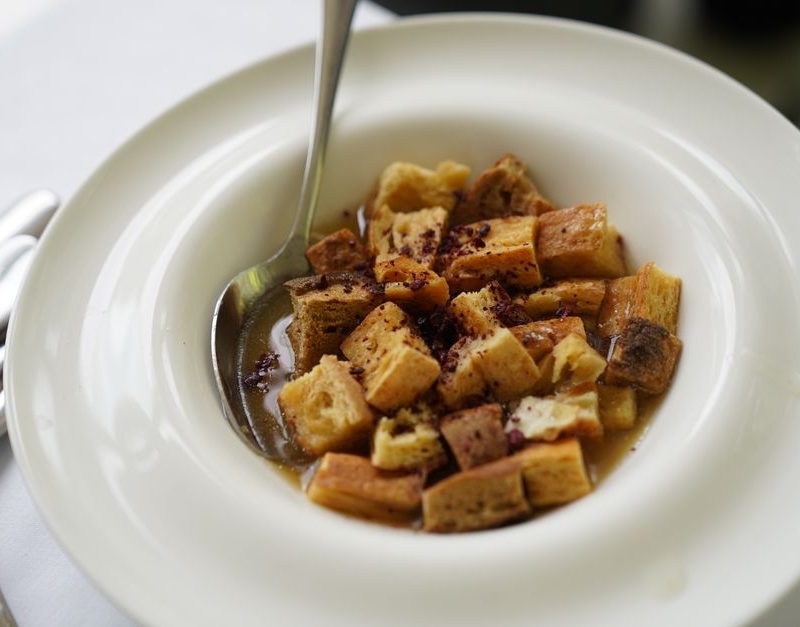
When bread is firm enough to cut neatly, cubes are an easy option. Toss 100 g bread cubes with 2 teaspoons olive oil and a pinch of dried oregano. Spread on a baking tray and cook at 190°C, or 170°C fan, for around 10–15 minutes, turning once. Check frequently because small pieces and very dry bread colour quickly.
Scatter a few over a soft bean mash or roasted vegetables just before serving. Adding them at the last moment preserves their crunch. If you stir them into a wet dish too early, they will absorb moisture and soften.
For a different shape, slice bread into thin fingers, brush lightly with oil and bake until crisp. Serve beside a vegetable dip or an egg dish. Use plain seasoning when the rest of the meal already contains olives, cheese or other salty ingredients.
Use crumbs to adjust a mixture
Soft breadcrumbs can help bring together vegetable patties or fishcakes when the mixture feels too loose. Add a spoonful at a time, mix gently and allow a short rest before deciding whether more is needed. Bread absorbs moisture gradually, so adding a large handful immediately can leave the result dry.
This works best as a small adjustment to a recipe you already use. Breadcrumbs cannot replace cooking the mixture properly, and they will not fix vegetables that are sitting in excess water. Drain or squeeze those ingredients first, then judge the texture.
Make the next slice easier to use
If you have more bread than you can use soon, freeze it while it is still suitable to eat. Separate slices so you can remove only what you need, and label the bag with its contents and freezing date. Freeze crumbs in small portions for cooked toppings.
Keep the amount of bread in proportion to the meal you want. A small topping can finish a generous dish of vegetables, while a bread bake can sit alongside a fresh salad. You do not have to turn every leftover into a large batch. Giving one heel or a couple of slices a clear purpose is often enough to make tomorrow’s cooking easier.