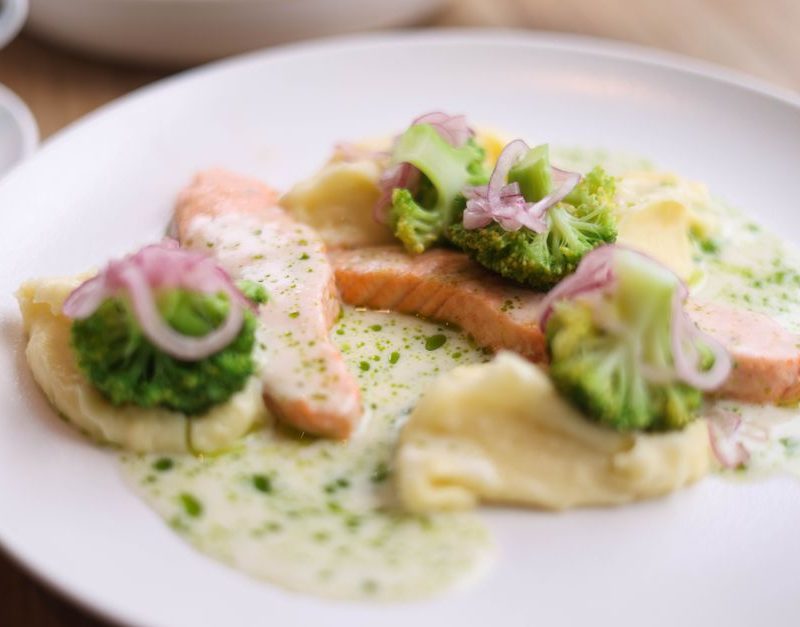
Baked salmon with herby crushed potatoes makes a satisfying dinner with very little fuss. The fish is simply seasoned and baked until it flakes easily, while the potatoes are broken into rough pieces and folded with fresh herbs. A spoonful of lemon yoghurt brings the two together, and green beans give the plate a fresh, crisp finish.
The focus here is the contrast between tender salmon and potatoes that still have some texture. There is no glaze to prepare and no need to turn the potatoes into smooth mash. Start the potatoes first, then use their cooking time to get the fish into the oven and prepare the remaining ingredients.
Baked Salmon With Herby Crushed Potatoes
Serves: 2. Preparation: about 15 minutes. Cooking: about 25 minutes, with several elements cooking at the same time. You will need a saucepan, a small roasting dish, a bowl and a separate pan or steamer for the beans.
Ingredients
- 2 salmon fillets, about 140-160g each, pin bones removed
- 450g small new potatoes, scrubbed
- 200g green beans, trimmed
- 1 tablespoon olive oil
- 1 lemon, washed, for zest, juice and wedges
- 2 tablespoons chopped fresh flat-leaf parsley
- 1 tablespoon chopped fresh dill
- 1 tablespoon finely snipped fresh chives
- 4 tablespoons plain natural yoghurt
- Freshly ground black pepper
- A small pinch of salt, to taste
You can use skin-on or skinless salmon. Choose fillets of similar thickness so they are likely to finish cooking together. If the potatoes vary in size, halve the larger ones before cooking. Leave their skins on for texture, removing any damaged patches as you scrub them.
Method
- Start the potatoes. Heat the oven to 200 degrees Celsius, or 180 degrees Celsius fan. Put the potatoes in a saucepan and cover with cold water. Add a small pinch of salt if using. Bring to the boil, reduce to a steady simmer and cook for 15-20 minutes, until a knife slides easily into the centre.
- Prepare the fish. Put the salmon in a small roasting dish, skin-side down if it has skin. Rub with 1 teaspoon of the olive oil, then add black pepper and half the finely grated lemon zest. Put it in the oven when the potatoes have been simmering for about 8 minutes.
- Bake the salmon. Cook for about 12-15 minutes, depending on the thickness of the fillets. Check the thickest part: the flesh should be opaque throughout and separate easily into flakes. Give it more time if needed. Use these visual checks as well as the timer, particularly with thick pieces.
- Make the yoghurt sauce. Stir the yoghurt with the remaining lemon zest, 1 teaspoon of lemon juice and a little black pepper. Taste and add another small squeeze of juice if you prefer a sharper sauce. Refrigerate until you are ready to serve.
- Cook the beans. Steam or boil the green beans for 4-6 minutes, until tender but still with a little bite. Drain well. Keep them briefly covered if they are ready before the rest of the meal, without leaving them sitting in their cooking water.
- Crush the potatoes. Reserve a mugful of their cooking water, then drain. Return the potatoes to the warm pan and leave uncovered for a minute to let surface moisture evaporate. Add the remaining 2 teaspoons of olive oil and press gently with a fork to make rough chunks.
- Add the herbs and serve. Fold the parsley, dill and chives into the potatoes with 2 teaspoons of lemon juice. Add reserved cooking water a tablespoon at a time if they seem dry. Taste and adjust the seasoning. Serve with the salmon, beans, yoghurt sauce and wedges cut from the remaining lemon.
Getting the crushed potatoes right
New potatoes hold their shape well, making them useful for this rough, chunky finish. They still need to be fully tender before you crush them. If a fork meets resistance in the centre, let them simmer a little longer rather than trying to break up firm potatoes.
Press each potato once or twice, then gently fold the mixture together. You want a mixture of larger pieces and smaller broken edges that catch the oil and herbs. Avoid vigorous stirring, which will break them down further. The reserved water helps loosen everything without needing extra oil.
Add the herbs after crushing so they stay fresh and fragrant. Tender parsley stalks can go into the mixture if they are finely chopped, but leave out thicker stalks. Taste a forkful before adding more lemon: the yoghurt sauce will bring another layer of sharpness to the plate.
Keeping everything ready together
If the potatoes finish before the salmon, drain them and keep them covered off the heat for a few minutes before crushing. If the fish finishes first, take it out of the oven and cover loosely while you finish the sides. Leaving cooked salmon in a hot oven can dry it out.
This recipe assumes chilled, fully thawed salmon. If yours is frozen, follow the packet instructions for defrosting and cooking. Keep raw fish and the utensils used to handle it separate from the herbs and yoghurt, which will not receive further cooking.
Simple variations
- Change the herbs: replace the dill with extra parsley and chives, keeping the overall quantity similar. A little chopped mint also works well with lemon and potatoes.
- Swap the vegetables: use steamed broccoli or peas in place of green beans. Cook separately until tender and drain before serving.
- Try a dairy-free sauce: choose an unsweetened plain dairy-free yoghurt alternative with a flavour that suits savoury food.
- Add capers: stir a teaspoon of drained, chopped capers into the yoghurt for a briny finish. Taste before adding salt.
Serving and storing
Spoon the potatoes alongside the salmon, with the beans tucked beside them and the sauce added at the table. For a larger appetite, increase the potatoes or add another vegetable. Keeping lemon wedges on the side lets everyone adjust the sharpness of their own serving.
Cool leftovers promptly and refrigerate in covered containers within two hours. Store the yoghurt separately and eat refrigerated leftovers within two days. Reheat the salmon, potatoes and beans until steaming hot throughout, and reheat only once. A covered ovenproof dish helps retain moisture; add a splash of water to the potatoes before warming. Spoon over the chilled yoghurt after reheating.