Canned tomatoes are not one interchangeable ingredient. A spoonful of concentrated paste does a different job from a can of whole peeled tomatoes, while diced tomatoes may hold their shape when you want a smooth sauce. Choosing the right form saves adjustment later. Start with the dish’s intended texture, then read the label for ingredients, seasoning, and pack size.
Choose Whole Tomatoes When You Want Control
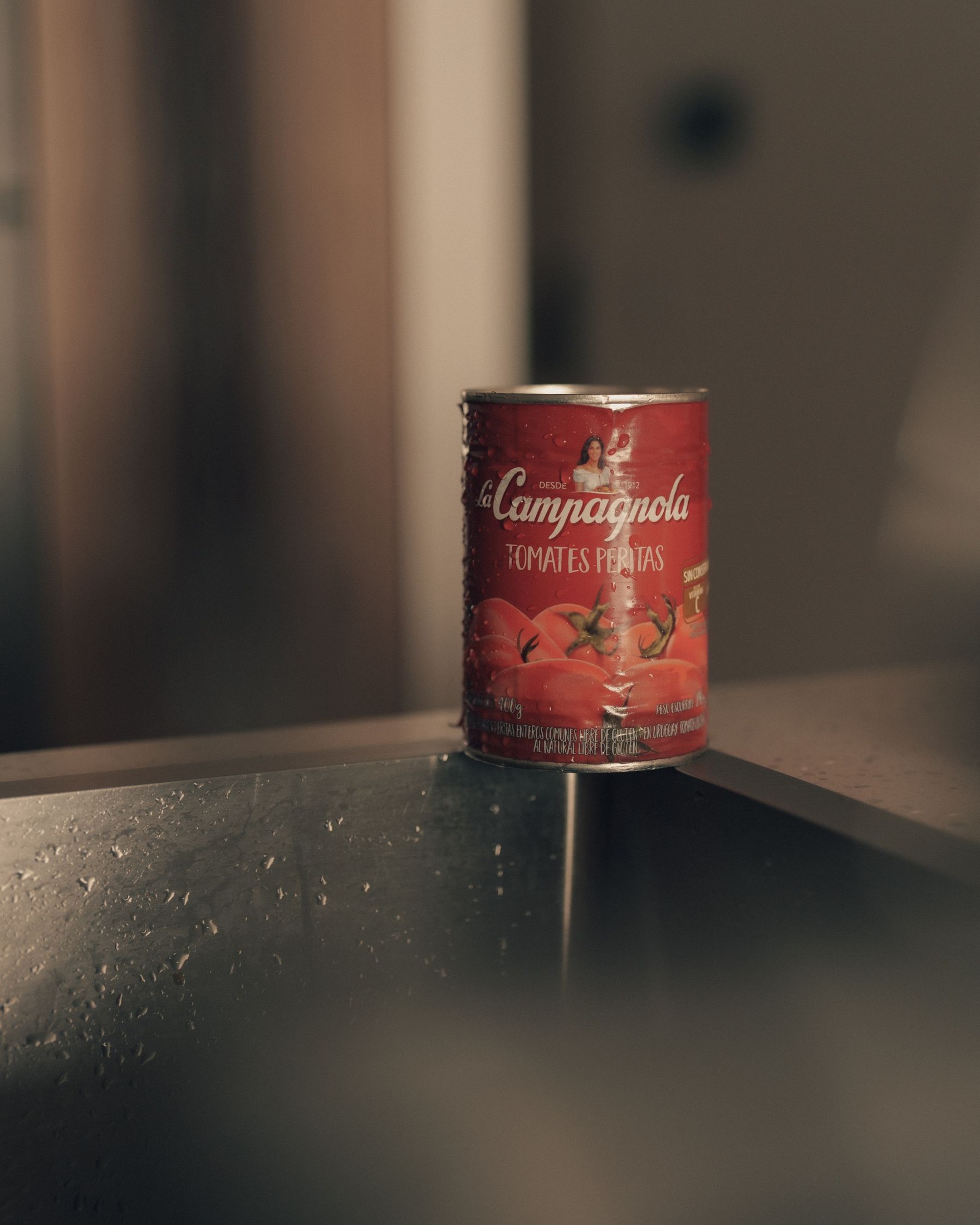
Whole peeled tomatoes let you decide how much to break them down. Crush them roughly for a chunky sauce, cut them for a stew, or blend them for a smoother base. The surrounding juice or puree also affects the starting thickness, so read the description rather than assuming every can behaves alike.
Opening a large can simply because it seems versatile can create unnecessary leftovers. Check the recipe quantity first. If you regularly use only part, plan a second dish or a freezer portion before opening it. Versatility is helpful only when the remainder has a destination.
Use Diced Tomatoes for Distinct Pieces
Diced tomatoes are convenient when you want visible chunks without chopping. They can suit chili-style dishes, bean stews, and vegetable mixtures where pieces are welcome. If you want a completely smooth sauce, whole or crushed tomatoes may save work.
Some diced products include firming ingredients such as calcium chloride. Check the list if the tomatoes tend to stay in separate pieces longer than expected. That does not make the ingredient inherently unsuitable; it means you should choose it for a dish where retained shape is useful rather than repeatedly waiting for it to dissolve.
Read Crushed, Pureed, and Sauce Labels Carefully
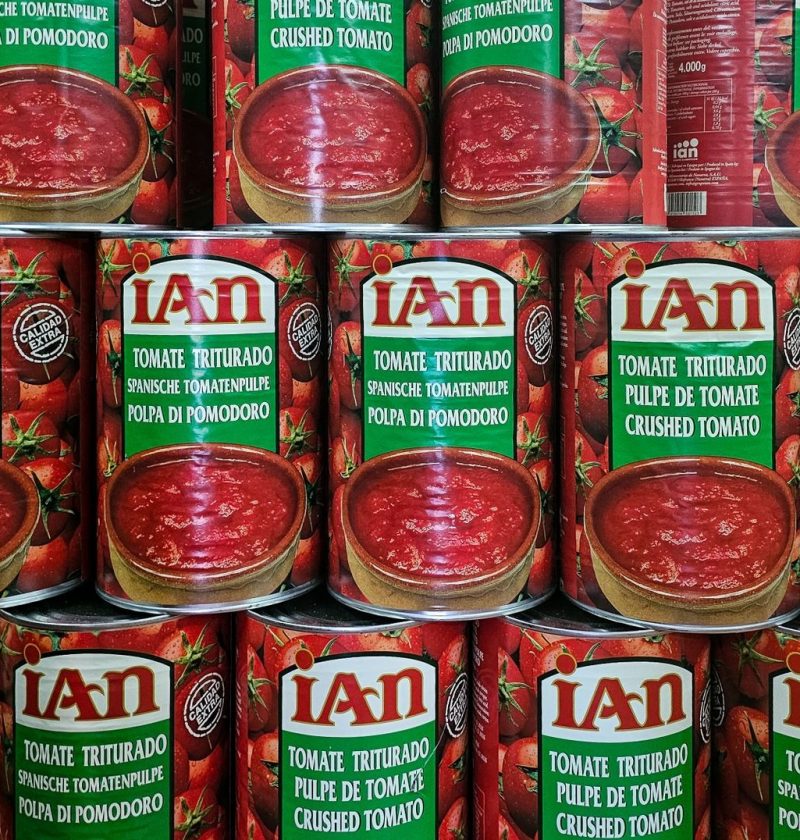
Crushed tomatoes offer a useful middle ground, although consistency varies by brand. Tomato puree and tomato sauce can mean different products in different countries. One package may be a plain smooth tomato base while another is a seasoned sauce, so the name alone cannot settle the choice.
| Form | Typical role | Check before buying |
|---|---|---|
| Whole peeled | Flexible sauce or stew base | Packing liquid and can size |
| Diced | Visible tomato pieces | Seasoning and firming ingredients |
| Crushed | Textured sauce | Actual consistency |
| Paste | Concentrated tomato addition | Concentration and recipe quantity |
Check imported products especially carefully when their familiar name has a different local meaning.
Treat Tomato Paste as a Concentrate
Paste adds concentrated tomato flavor and thickness in a small quantity. It is not a direct one-for-one replacement for canned whole tomatoes. If a recipe gives a spoon measure, measure it rather than adding an entire small can because the package looks modest.
Tubes can be practical for repeated small uses, while cans may suit a larger batch. Follow refrigeration instructions after opening either format. When freezing an unused portion, use a suitable covered container and label what it is. Once frozen, a small block of tomato paste can otherwise be difficult to distinguish from another red sauce.
Compare Added Ingredients on Equal Terms
Look for salt, sugar, herbs, garlic, peppers, and other additions. A seasoned product may save a step, but it can narrow the dishes you can make. Plain tomatoes give more flexibility when you want one can to serve a mild soup and a differently seasoned bean dish.
The FDA’s label guide explains that added sugars are included within total sugars. Tomatoes naturally contain sugars, so do not mistake every sugar entry for evidence of added sweetener. Read ingredients and compare sodium using equivalent serving quantities. A prominent natural or organic claim does not answer those questions.
Check Packaging Before Adding It to the Basket
Choose intact cans and jars. USDA advises against using leaking, bulging, or badly dented cans. Do not taste suspect contents to decide whether they are usable. A bargain or an approaching meal does not change that handling decision.
Store unopened shelf-stable tomatoes in the conditions specified on the package, away from excess heat and dampness. Keep older cans visible in front of newer ones. If you remove an outer multipack wrapper, retain any information needed to identify the product and read its date and instructions later.
Adjust the Dish After You See the Tomatoes
Begin a sauce with less extra liquid than you think you may need. Simmer gently, observe the thickness, and add more liquid in stages. A watery can and a dense puree need different treatment, even if both fit the recipe’s broad description.
Taste before adding salt or sweetening ingredients. You may need more simmering, a different herb, or simply a better balance with the other components. Keep a note of which tomato form worked for the dish. That small observation is more useful on the next shopping trip than assuming one form is always best.