A summer barbecue can be a relaxed, satisfying meal with plenty of variety: smoky vegetables, something substantial from the grill, good bread and a few fresh accompaniments. You do not need a separate menu of special health foods. The most useful changes happen when you plan what will share the table, rather than concentrating entirely on burgers and sausages. These ideas help you put together a generous barbecue that is enjoyable to cook and easy for guests to make their own.
Build the menu around a complete meal
Before shopping, decide on a main grill option, a vegetable dish, a starchy accompaniment and a sauce. This gives the meal some structure without requiring lots of cooking. For example, you could serve lemon chicken with grilled peppers, wholemeal rolls and a yoghurt dressing, or tofu skewers with corn on the cob, baked potatoes and tomato salsa.
You can still serve favourite sausages or burgers. Give them company on the table so that they are one element of the meal. There is no need to make every dish feel worthy, or to achieve a perfect balance at a single gathering. A varied menu simply makes it easier for everyone to find something satisfying.
Choose a manageable selection for the grill
One or two main options are usually easier to manage than a crowded grill full of foods with different cooking requirements. Chicken, fish, tofu and bean-based burgers all offer different flavours and textures. Ask about dietary requirements before you choose, and check ingredients in marinades and sauces as well as the main dishes.
Firm tofu works well cut into thick slabs, patted dry and brushed with oil and spices. Fish can be cooked in a suitable barbecue basket or a foil parcel to keep delicate pieces together. If you are serving halloumi, pair its salty flavour with unsalted vegetables and a sharp, fresh accompaniment.
For meat, choose pieces of a similar size so that cooking is more predictable. A marinade adds flavour but does not make raw meat safe to eat. Keep marinated ingredients refrigerated until you are ready to cook them, and follow any cooking instructions on the packaging.
Use the grill to create contrasting vegetable textures
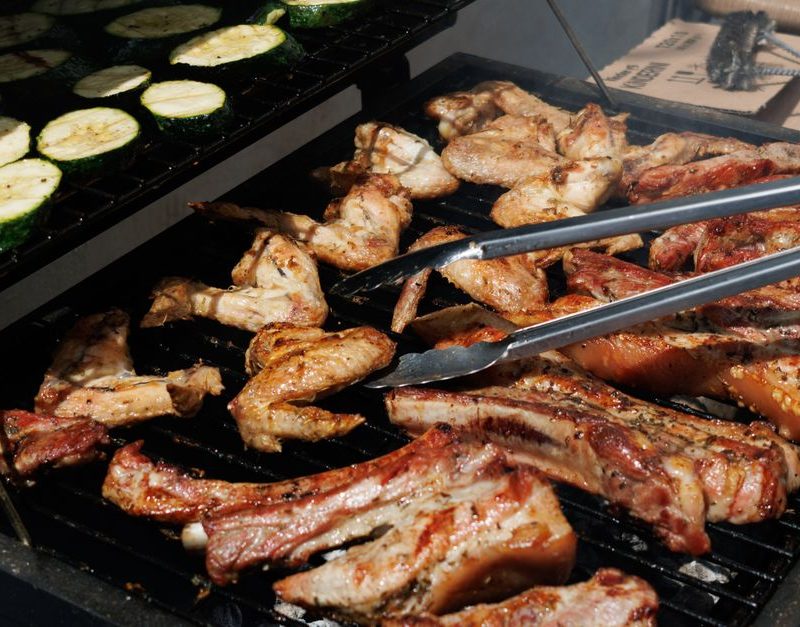
Vegetables earn their place at a barbecue through flavour. Peppers become soft and sweet, courgettes develop browned edges, and mushrooms turn juicy. Cut pieces large enough that they will not slip through the grate, or use a grill basket. Brush lightly with oil rather than soaking them.
Keep different vegetables on separate skewers if their cooking times vary. A mushroom may be ready while a chunky onion is still firm. Give the pieces some space, turn them as needed and move them away from fierce heat if they start to blacken. Aim for tender vegetables with browned patches, and discard burnt sections.
Finish cooked vegetables with lemon juice, torn basil or chopped parsley. Adding these after grilling keeps the flavours fresh. A cool, crunchy accompaniment, such as sliced radishes and cucumber, provides a useful contrast without needing another cooked dish.
Make the accompaniments substantial
Bread, potatoes and grains help turn a collection of grilled foods into a meal. Wholemeal rolls are convenient, while small boiled potatoes can be dressed with olive oil, lemon and herbs. You can cook potatoes fully indoors and finish them briefly on the barbecue in a suitable tray.
A bean side is particularly useful when some guests prefer less meat. Toss drained butter beans with chopped roasted peppers, parsley and a little vinaigrette. Keep it simple if you already have several strong flavours on the grill. You do not need a separate elaborate salad for every main option.
Put out serving spoons so people can help themselves to an amount that suits their appetite. Guests may want a smaller first plate and then return for more. Keeping the meal flexible is more welcoming than prescribing what everyone’s plate should look like.
Try a lemon yoghurt sauce for the whole table
This cool sauce suits grilled vegetables, chicken, potatoes and wraps. It makes enough for around four people as an accompaniment, and you can adjust its thickness depending on how you plan to serve it.
Ingredients
- 150g plain yoghurt
- 1 tablespoon lemon juice, plus more to taste
- 1 tablespoon finely chopped mint or parsley
- Half a small garlic clove, finely grated, optional
- Freshly ground black pepper
- A little cold water, if needed
Method
- Stir the yoghurt and lemon juice together in a small bowl.
- Add the herbs, optional garlic and a little black pepper. Mix thoroughly, then taste.
- Add a splash of water for a pouring dressing, or leave it thick for spooning into rolls. Cover and refrigerate until serving.
For a dairy-free version, use an unsweetened plain soya yoghurt alternative, checking that it suits your guests. Keep the sauce chilled and bring out a small bowl at a time. Refrigerate any unused sauce promptly and follow the yoghurt’s storage instructions.
Give sauces and toppings a clear purpose
A few well-chosen extras can do more than a crowded collection of bottles. Offer something sharp, something creamy and something fresh: mustard, the yoghurt sauce and sliced tomatoes, for example. Put sauces on the side so guests can choose how much they want.
If you enjoy a sweet barbecue glaze, brush it on towards the end of cooking to reduce scorching. Keep a clean portion separate before any sauce touches raw meat. Never use a brush or marinade that has been in contact with raw meat on food that is ready to eat.
Plan the cooking order as well as the menu
Prepare cold accompaniments before lighting the barbecue, then keep them refrigerated. Set out separate utensils and plates for raw ingredients and cooked food. Wash your hands after handling raw meat, and keep ready-to-eat foods away from its juices.
Cook burgers, sausages, chicken and pork thoroughly. A browned outside does not establish that the centre is cooked; a clean food thermometer used with reliable cooking guidance is helpful. Cooking meat fully indoors and immediately finishing it on the barbecue is another practical option. Never partially cook it and leave it to finish later.
Serve in small batches instead of leaving the entire spread outside throughout the afternoon. Refrigerate suitable leftovers promptly, and discard perishable food if you are unsure how long it has been sitting out. This also means later arrivals can enjoy a freshly served plate.
Finish with something easy to share
Bring out a bowl of strawberries, sliced melon or peaches alongside any pudding you fancy serving. Fruit does not need to replace dessert to have a place at the table. If you grill peach halves, use a clean section of the barbecue and clean utensils, then serve them while warm.
For a straightforward gathering, your final menu might be chicken or tofu, grilled peppers and courgettes, wholemeal rolls, the yoghurt sauce and a bowl of summer fruit. Prepare the sauce and vegetables ahead, leave space on the grill and let guests assemble their own plates. That is enough variety for an appealing barbecue without spending the whole occasion cooking.