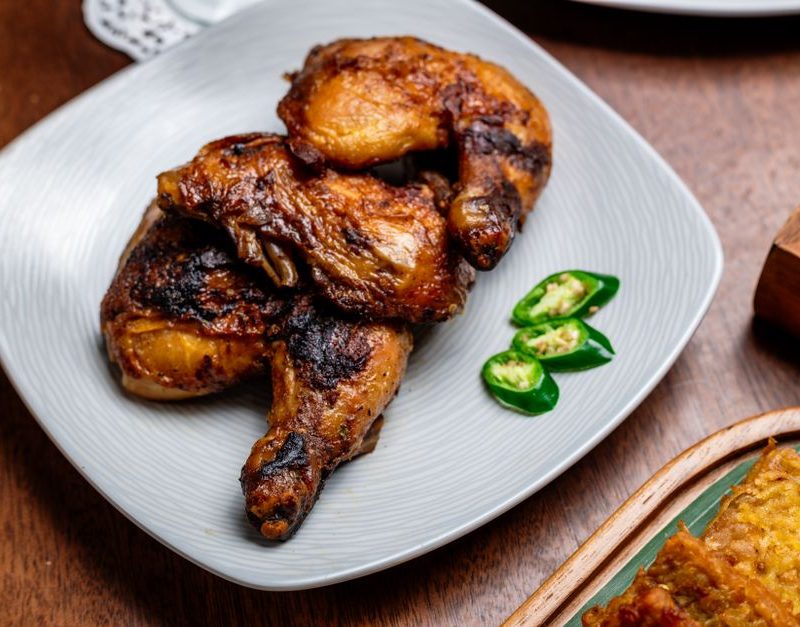
Lemon and Garlic Roast Chicken Thighs bring together golden skin, tender meat and a sharp, savoury spoonful of roasting juices. This recipe keeps the focus on the chicken: lemon zest perfumes the seasoning, garlic softens underneath the thighs, and a little water helps you collect the browned flavour from the tin. Serve vegetables and potatoes separately so you can choose whatever suits your appetite and what you already have.
The useful trick is to keep the wet ingredients beneath the chicken and the skin exposed to the oven heat. You get a bright lemon flavour without soaking the top of each thigh. There is no long marinade or separate sauce to organise, making this a manageable roast for an ordinary evening or a relaxed weekend lunch.
What you will need
Serves four. Allow around 15 minutes for preparation, 40–50 minutes for roasting and 5 minutes for resting. Larger thighs may need longer, so use a food thermometer to check the meat rather than relying on the clock alone.
- 8 small bone-in, skin-on chicken thighs, about 1.2kg in total
- 1 large lemon, washed and dried
- 6 garlic cloves, peeled and lightly crushed
- 1 tablespoon olive oil
- 1 teaspoon dried oregano
- Half a teaspoon fine salt, or less to taste
- A quarter of a teaspoon freshly ground black pepper
- 75ml water, plus a little extra if needed
- 2 tablespoons chopped flat-leaf parsley, optional
You will also need a shallow roasting tin large enough to hold the thighs in a single layer with a little space between them. A fine grater, kitchen paper and a food thermometer are helpful. A very deep casserole dish restricts air around the chicken, while an oversized tin can let the small amount of liquid evaporate too quickly.
How to make lemon and garlic roast chicken thighs
- Heat the oven. Set it to 220°C, or 200°C fan, gas mark 7. Place a shelf in the middle. Prepare your chosen side dishes separately, allowing time for anything that needs longer than the chicken.
- Prepare the lemon seasoning. Finely grate the yellow zest into a small bowl, avoiding the bitter white pith. Mix with the olive oil, oregano, salt and pepper. Cut the zested lemon in half and squeeze one half into a separate cup. Slice the remaining half into four pieces.
- Dry and season the chicken. Pat the thighs dry with kitchen paper; do not wash raw chicken. Discard the paper immediately. Rub the zest mixture over the thighs, including the underside, then wash your hands and clean any surfaces or utensils that have touched the raw meat.
- Arrange the roasting tin. Scatter the garlic and lemon pieces across the base. Place the thighs on top, skin-side up, keeping most of the garlic tucked beneath the meat. Pour the water and reserved lemon juice into the base of the tin, avoiding the skin.
- Roast uncovered. Cook for 40–50 minutes, checking after about 30 minutes. If the tin looks dry or the juices are catching, carefully add a small splash of hot water around the chicken. Leave the thighs skin-side up throughout and avoid spooning liquid over them.
- Check the centre. Insert a clean food thermometer into the thickest part of the meat, without touching bone. The centre should reach 75°C for at least 30 seconds. Check several thighs, especially the largest ones. If they need longer, return the tin to the oven and check again.
- Rest and finish the juices. Transfer the cooked thighs to a clean warm plate and rest for 5 minutes, leaving the skin uncovered. Mash the softened garlic into the tin juices with a fork, discarding any firm pieces. Stir in a splash of hot water if needed to loosen the browned bits.
- Serve. Taste the juices and adjust the seasoning if necessary. Spoon a little onto each plate beside the chicken and scatter over the parsley, if using. Discard the roasted lemon pieces if they taste too bitter; they have already flavoured the dish.
Getting the skin golden and the garlic mellow
Give each thigh some room
Chicken releases moisture as it cooks. If the thighs are pressed tightly together, that moisture has less space to escape and the edges can stay pale. Choose a wider tin or divide the chicken between two smaller tins if necessary. When using two tins, split the garlic, lemon and liquid between them and check both during roasting.
Drying the skin before seasoning also helps. You do not need to leave the chicken sitting on the worktop beforehand. Take it from the fridge when you are ready to prepare it, pat it dry and put it into the preheated oven promptly.
Protect the garlic from direct heat
Crushed whole cloves soften more gradually than finely chopped garlic. Keeping them under the thighs protects them from scorching while letting their flavour mingle with the juices. Any garlic exposed at the edge of the tin may darken sooner, so tuck it back underneath when you check the liquid.
Use the lemon zest for fragrance and the juice for acidity. Pouring lots of juice over the skin makes the surface wetter, and adding extra lemon does not automatically improve the sauce. If you prefer a sharper finish, offer a fresh lemon wedge at the table.
What to serve alongside
Boiled new potatoes are particularly good for catching the garlicky juices. Add steamed broccoli, green beans or cabbage for a vegetable side that needs little attention. Start the potatoes while the chicken roasts, then cook the greens as the thighs finish.
For a different plate, serve with wholemeal couscous and a cucumber and parsley salad. Keep the salad dressing light because the chicken already brings lemon and oil. Crusty bread and a generous portion of cooked greens also work well when you want fewer pans.
Simple changes to try
- Change the herbs: replace the oregano with a teaspoon of dried thyme, or tuck a couple of small rosemary sprigs underneath the chicken.
- Add gentle warmth: mix half a teaspoon of sweet smoked paprika into the oil and zest. Watch the colour carefully because the seasoning will darken as it roasts.
- Use skinless thighs: keep the bone-in pieces and begin checking them earlier. They will have a softer surface, so judge readiness by the centre temperature.
- Cook a smaller quantity: halve all the ingredients and use a smaller tin. Individual thighs still need thorough cooking, so do not simply halve the oven time.
Storing and enjoying leftovers
Cool leftover chicken promptly, divide into shallow containers and refrigerate within two hours. Keep the juices with the meat to help it stay moist. Eat refrigerated leftovers within 48 hours, or freeze them in meal-sized portions. Label the containers so you can identify them easily.
Defrost frozen portions thoroughly in the fridge before reheating. Cover the chicken with its juices in an ovenproof dish and heat until steaming hot throughout, checking the centre. Reheat only once. The skin will soften during storage, but the meat works well pulled from the bone and stirred into hot couscous or served cold with freshly prepared salad.