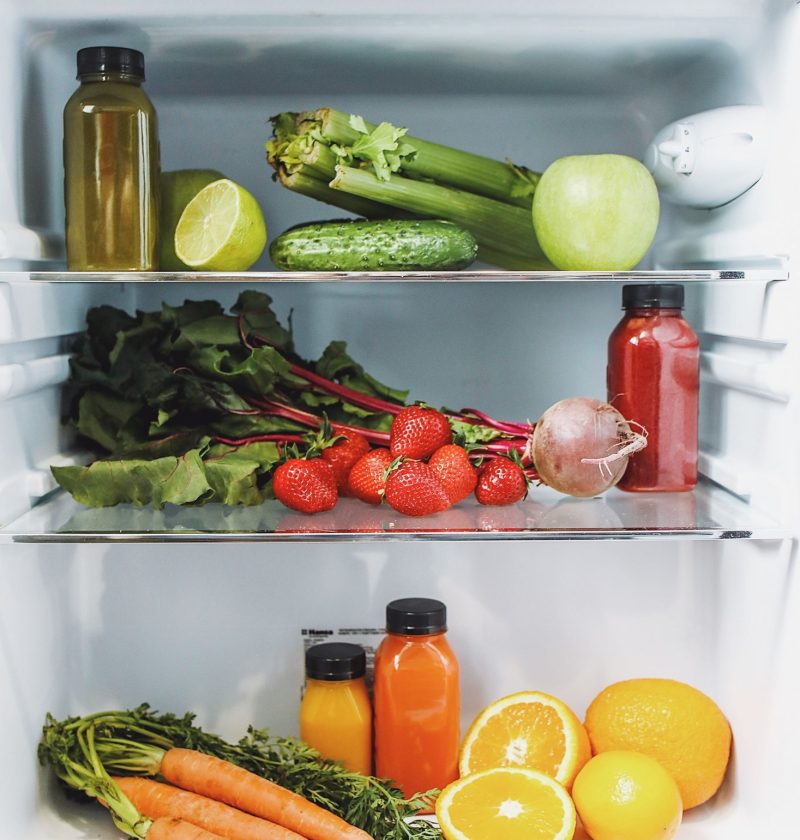
A refrigerator needs more than neat containers. Its arrangement should make it difficult for raw-food juices to reach food that will be eaten without further cooking. It should also let you see what needs using and leave room for cold air to circulate. You can achieve those goals without buying a matching storage system or assigning every shelf an elaborate label.
Check Temperature Before Moving Food Around
Begin with an appliance thermometer rather than relying only on the numbered dial. The dial setting is not necessarily the temperature of the food area. If your refrigerator has noticeably warmer spots, investigate the arrangement and the appliance instructions before choosing storage zones.
USDA recommends 40 F or below throughout the cabinet and checking several areas. Leave gaps for airflow instead of tightly filling every space. A handsome row of containers does not help if it prevents the refrigerator from maintaining safe conditions around them.
Give Raw Animal Foods a Contained Lower Zone
Keep raw meat, poultry, and seafood in secure containers on a lower shelf, below cooked and ready-to-eat foods. Original retail wrapping can leak, so a washable tray or lidded container adds practical containment. Choose a container that fits the package without forcing it against other foods.
USDA advises containing raw-food juices to prevent drips onto other items. Do not rely on a thin carrier bag as your entire system. Check the tray after shopping and during refrigerator thawing. If a spill occurs, deal with it promptly using an appropriate cleaning routine, rather than hiding it beneath another package.
Reserve a Protected Area for Ready-to-Eat Food
Place cooked meals, prepared salads, and other foods eaten without another cooking step above the raw-food zone. Use covered containers and avoid balancing them on raw packages. A prepared sandwich should not share a tray with uncooked chicken simply because both will be used tomorrow.
Keep frequently served items easy to reach. If a cooked meal is buried at the back, someone may leave the door open while searching or forget the meal entirely. Clear containers can help, but a plain label works too. The important information is what the food is and when it was prepared or opened.
Use Drawers and Door Shelves Intentionally
Follow the appliance’s instructions for specialty drawers rather than assuming every drawer provides the same conditions. Keep produce protected from raw-food packaging and drips. If a raw-food container sits above a produce drawer, make sure containment is secure and the drawer does not become the spill-catching system.
The FDA advises keeping eggs in their carton, not in the refrigerator door. Use door space for suitable products according to their storage directions and the conditions of your appliance. Do not move sensitive foods into a warmer location merely to make the central shelves look tidier.
Create a Visible Use-First Area
Set aside a small protected section for foods already assigned to the next meal. It might hold an opened yogurt tub, cooked vegetables, and a labeled sauce. Keep raw items in their own zone even if they also need prompt use; the use-first idea should never override separation.
| Area | Main purpose |
|---|---|
| Protected upper space | Covered cooked and ready-to-eat foods |
| Contained lower space | Raw meat, poultry, and seafood |
| Produce drawers | Suitable fruit and vegetables, protected from drips |
| Small visible section | Clearly identified foods planned for the next meals |
Use dates and storage instructions, not shelf position alone, to decide whether a food remains usable.
Plan Space for Cooling and Thawing
Before cooking a large batch, identify where shallow containers will go. Do not stack warm containers tightly into an already crowded shelf. Divide food sensibly and refrigerate promptly instead of waiting for a large pot to become completely cold on the counter.
For thawing, place the frozen item in a secure container in the appropriate refrigerator zone. Keep raw ingredients separate from cooked components. A large item may need substantial thawing time, so plan the move before the evening you want to cook. Avoid taking food out to the counter because the refrigerator plan was too late.
Make Resetting the Fridge a Small Habit
Before each grocery trip, inspect the use-first area, check labels, and remove spoiled or out-of-window foods. Wipe shelves and containers as needed. Move older unopened products ahead of newer ones without transferring questionable food into a fresh container to make it look current.
- Temperature checked with a thermometer.
- Raw foods securely contained below ready-to-eat foods.
- Prepared meals covered and labeled.
- Airflow spaces left open.
- Spills dealt with promptly.
The arrangement should be simple enough that everyone using the refrigerator understands it. A clear raw-food zone and a visible cooked-food area usually matter more than decorative bins.